A more humane response to the refugee crisis
Source: UNHCR (2015)
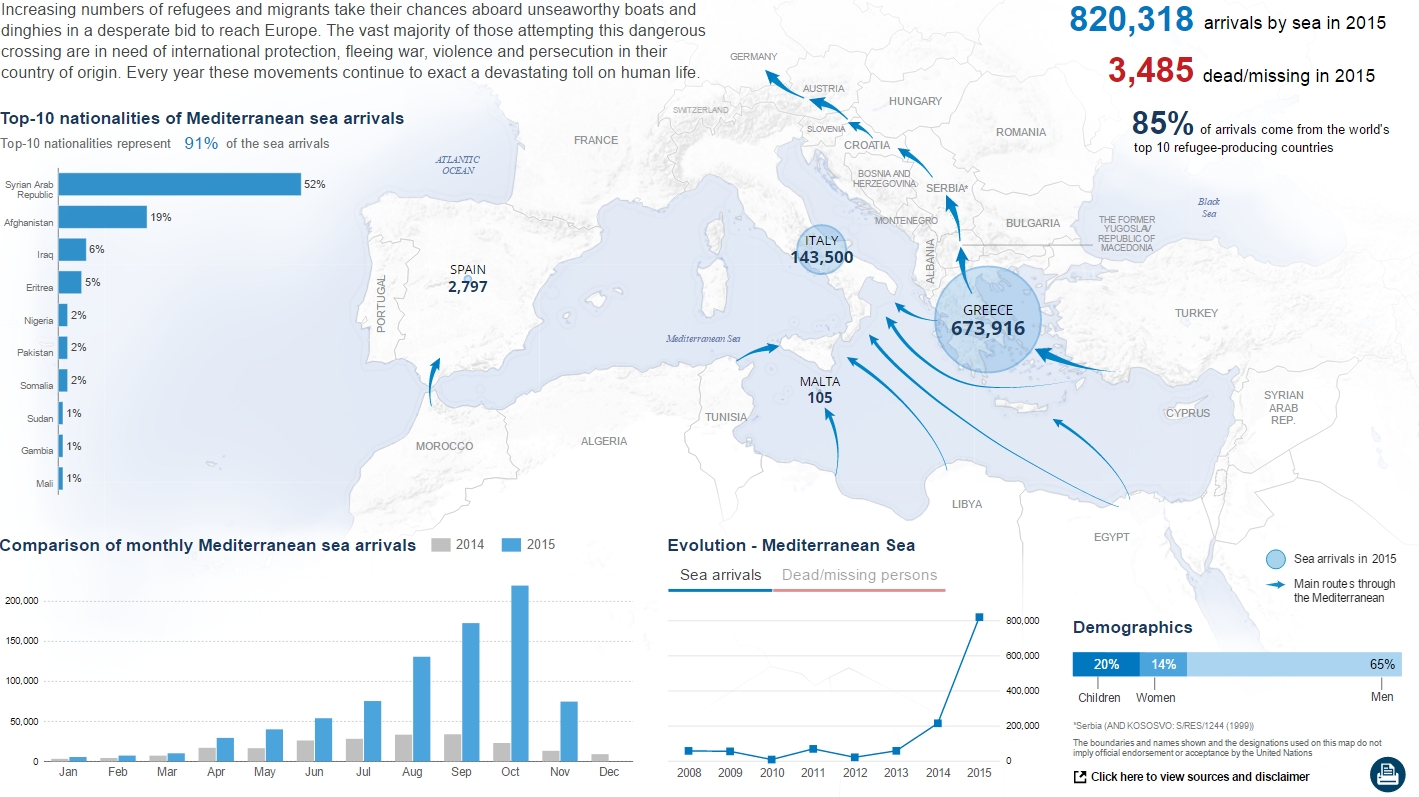
There are around 20 million refugees in the world out of 60 million displaced persons, according to UNHCR. During the period January-November 2015 some 820,318 refugees has arrived to Europe by sea and 3,485 have died or are missing. A full 65% of arrivals are men, mostly from Syria and Afghanistan. Most refugees have arrived in Greece to later make their way towards Germany and Sweden, through Macedonia, Serbia, Croatia, Slovenia, and Austria. 

What we see in the Mediterranean is a humanitarian crisis of huge proportions and it needs to be treated as such. Telling refugees they can have a permanent residentship while not establishing boundaries (capacity and which people to prioritize) or approving visas for safe travel through Europe is not a humane policy. Countries like Germany and Sweden have had to revise their policies (e.g. giving temporary asylum and increasing border controls) because it’s creating so much confusion and encouraging the growth in human trafficking and thus increasing the death toll on the sea. 

We have to understand that many refugees trying to reach Europe over the Mediterranean are often men with some money searching for better opportunities than they currently can find in e.g. Turkey or Lebanon. One reason for this is because the world’s rich countries have not funded the UN’s humanitarian agencies which are now on the verge of financial bankruptcy (The Guardian, 2015). This year the World Food Programme had to cut food rations to 1.6 million Syrian refugees, warning that this leaves many vulnerable to recruitment by extremist groups (The Guardian, 2015). Less humanitarian help in places of conflict has in turn lead to larger migration flows. Deteriorating conditions in Lebanon and Jordan have become intolerable for many of the 4 million people who has fled Syria, driving the latest waves of immigration towards north-west Europe. 

A humane policy would not reward only young men with the money to cross the sea. Instead it would determine the right to asylum based on needs, e.g. the sick or orphans, and give them a visa to safely travel into Europe. A more humane policy with increased funding to UN’s humanitarian agencies will also safeguard that social tensions don’t spin out of control in Europe, so that the refugees that get to come feel safe and welcome while people that want to stay in the region can do so without starving, turning to crime or violence.

A more humane policy by the rich EU is to provide resources (food, water, healthcare, family planning service, ecological restoration, education etc.) to vulnerable countries in the MENA region. Europe has long been a centre that has sucked in natural resources from the world's poor in exchange for worthless fiat and unpayable debts. Now it’s time to repay some of those resources, in the interest of peace and stability in the region.
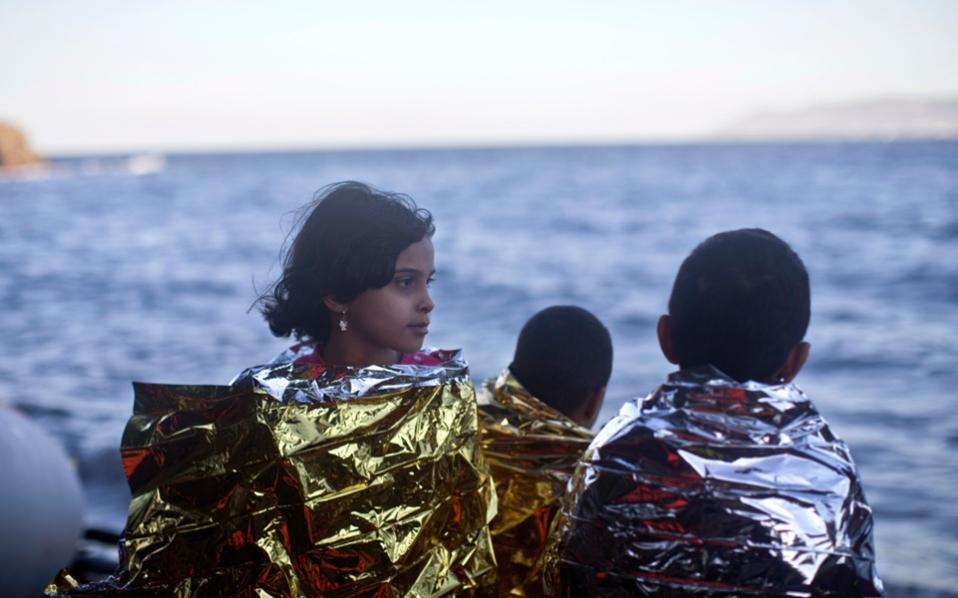
Credit: Ekathemerini
According to the Guardian article, quote: “The Syria regional refugee response plan is only funded to 35% of the $1.3bn needed to support refugees, both in the camps and by providing resilience funding for the countries hosting them” which is a disgrace, wealthy countries complaining about a refugee crisis but being unwilling to fund the response in the region.

The article goes on to state: “In August, a multi-million dollar shortfall forced the World Health Organisation to close down 184 health clinics across 10 of Iraq’s 18 districts, in an area that has seen severe fighting and massive internal displacement. The cuts have left 3 million people without access to healthcare. The World Health Organisation is trying to raise $60m to fund healthcare in Iraq but so far only $5.1m has been given by donors. Dr Michelle Gayer is director for emergency risk management at the WHO. She told the Guardian that the gap between the desperate need in countries such as Iraq and current funding levels risked permanent damage to public health across whole populations” (The Guardian, 2015)

There are plenty of young unemployed people in Europe that wants a job so why don't governments fund UN's programs that could make use of young talents at the same time as it helps vulnerable communities in the MENA region. That could actually help lower the risk of extremism spreading, as opposed to military intervention which only creates extremism. Better yet, take money from defence budgets and put it into aid if there "isn't enough funding" at the moment. Have we learned nothing from our previous failures?
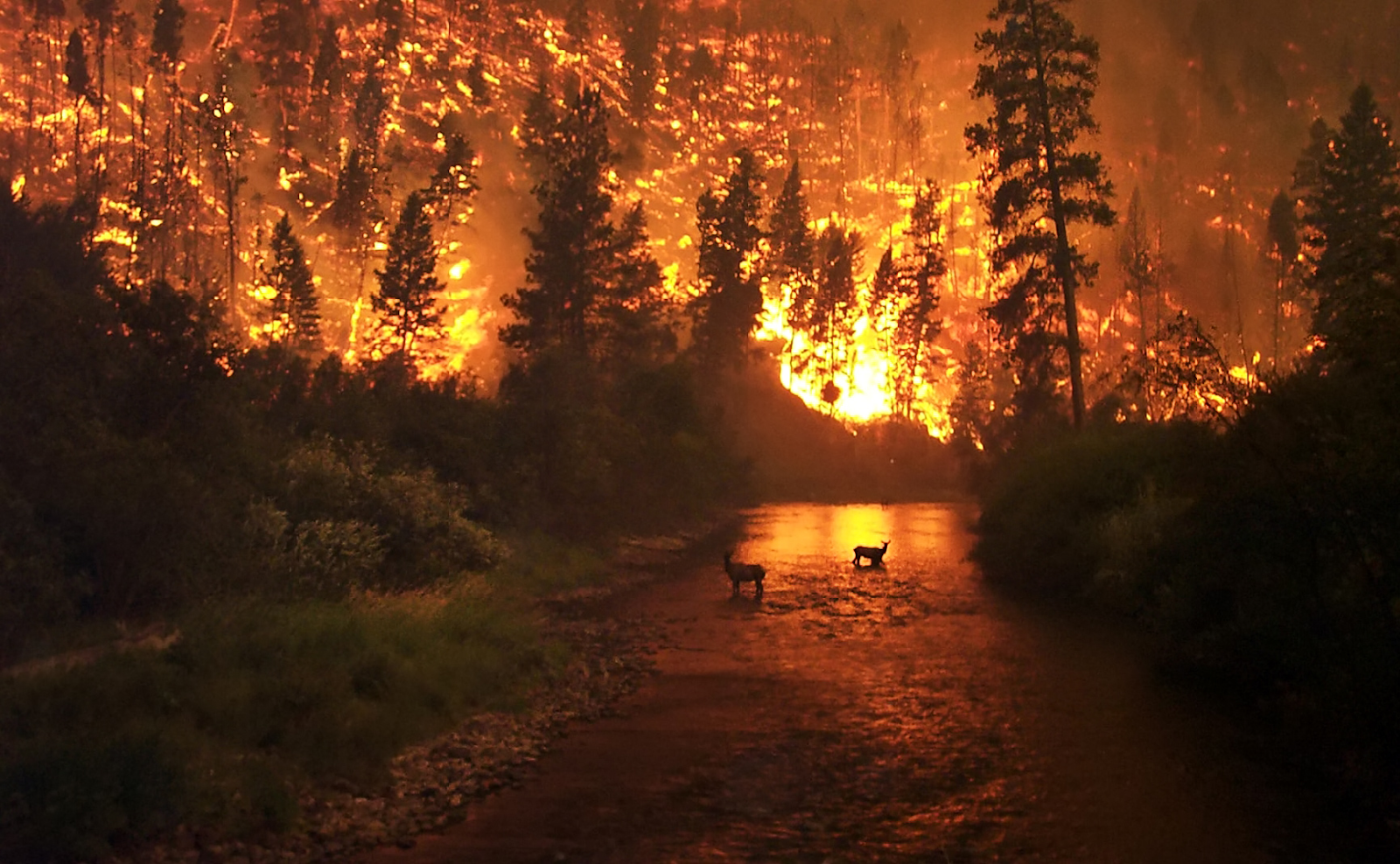
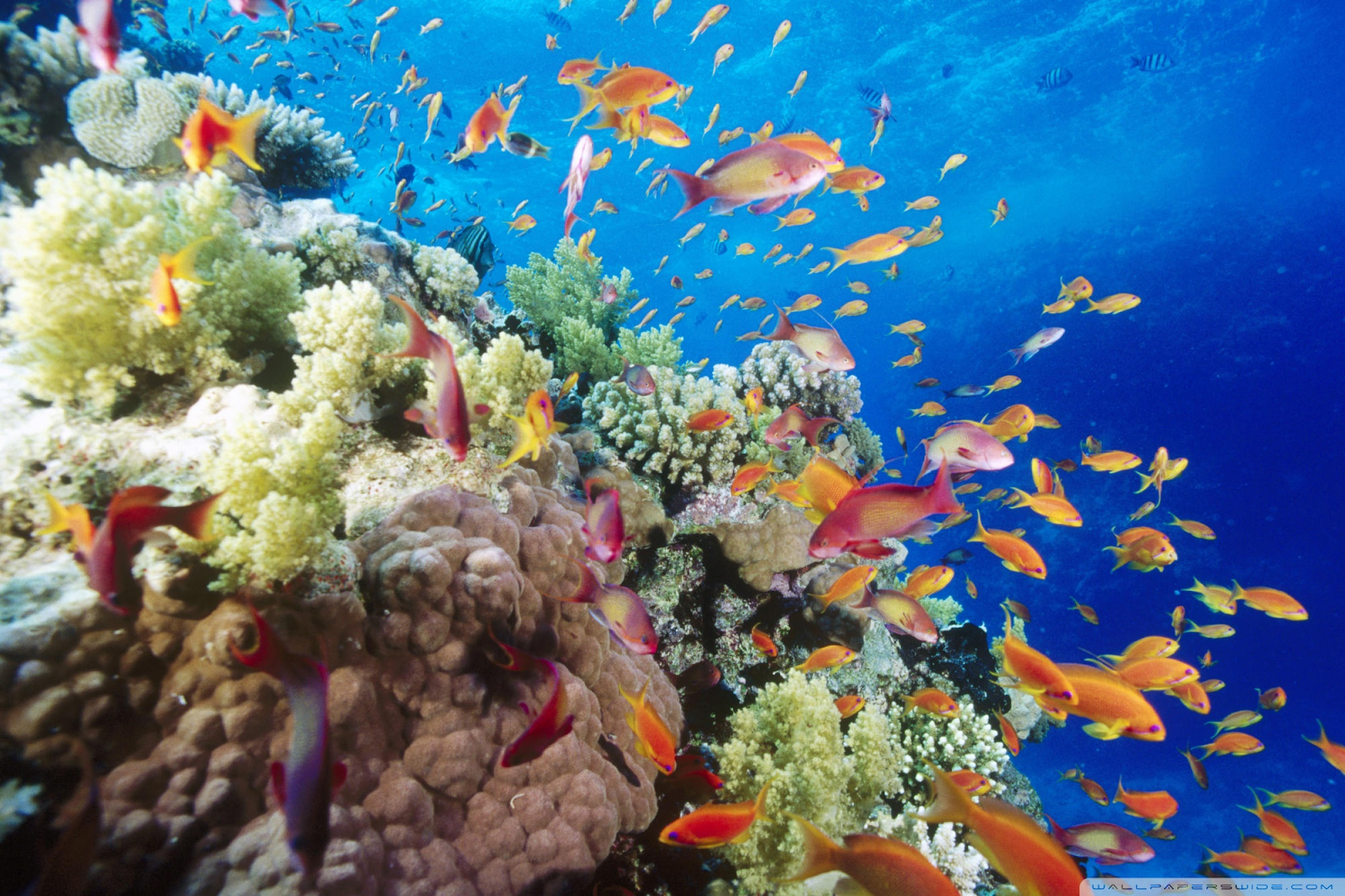
Coping with Extremes - General Resilience

Credit: John McColgan at USDA

General resilience

We need to increase society’s general resilience to shocks and disturbances. With that I mean that we need to increase communities capacity to adapt or transform in response to unfamiliar, unexpected and extreme shocks.

Extreme events have long lasting effects on society and need to be managed properly or major losses will be inevitable. Megadroughts in Syria and California, the rapid spread of wildfires in Indonesia and Canada or massive flooding in the UK and Denmark are just some examples of extreme events that we will have to get used to due to climate change and resource depletion. Other shocks may come from a fragile financial system in form of massive unemployment, from a dysfunctional political system that leads to a revolution or from mass migrations due to failed states. 

Extreme events are notoriously difficult to predict because probabilities are hard to measure and uncertainties are high. That's why it's so important to take proactive measures to strengthen a society's general resilience to such events. This requires a complex systems perspective and understanding of human-nature interactions. Strengthening general resilience includes:

1. Diversity and redundancy

The important thing with diversity is that it can offer both functional diversity and response diversity. In other words, a diverse system can offer many different functions but also a diversity of responses to disturbances so that critical functions are maintained even if some parts of the system fail. For example, in a marine ecosystem some fish may carry out similar functions (e.g. grazing on corals) so that if one species disappears there is another that can keep on carry out the critical function for the benefit of the overall ecosystem. Similarly if a bridge or air plane has many backup safety mechanisms that all perform the same function (i.e.redundancy) the risk of a collapse or crash is much lower. This is also applicable to the economy where a diversity of many small companies with similar functions contributes to stability in case some should default. That's why it’s very unhealthy to have a few but major banks that can crash the entire system. It is also a reason why societies with high income inequality do poorly, because all the wealth has been concentrated at the top which creates instability and risk of revolution. Heterogeneous landscapes with high biodiversity have higher resilience to extreme events and so monocultures is a really bad idea since it increases vulnerability to massive crop failure, loss of pollinators, and spread of pests.

2. Modularity and Decentralisation


Connectivity can both be a good and a bad thing depending on degree. In today’s society we most often have a high degree of connectivity, international interdependence, that makes us vulnerable to the rapid spread of extreme events or cascading effects. Modularity helps contain disturbances to specific regions/sectors and lowers the risk of contagion. The more self-sufficient communities can be the better. Especially for the provision of essential goods and services such as water, food, energy and health care. Decentralised systems of decision making are also more flexible and can respond more rapidly to a crisis than any central control system ever can.


3. Reserves

As was common sense only two generations ago having reserves, no matter if it’s food or skills, contribute to a faster recovery after a disturbance. Just-in-time logistics make communities vulnerable to sudden shocks or major disturbances. So does a reliance on finite resources like oil. Keeping strategic reserves while improving local supply or transitioning to renewables is increasingly important. We know that plants and animals that survive a disturbance are critical to ecological recovery from e.g. extraordinary fires or volcanic eruptions. Keeping seed banks is also increasingly important as ever more species are lost. Social memory is another important aspect that can help push for a faster recovery.


4. Manage feedbacks

To the extent it's possible society has to keep an eye on critical feedbacks and try to manage them so the system doesn’t cross thresholds that trigger harmful outcomes. For example, reducing waste and pollution and increasing recycling and use of biodegradable materials that can create circular resource flows that restore balance. Applying a systems perspective is crucial to this aspect of general resilience. Tighter feedbacks between e.g. producer and consumer makes feedbacks easier to manage. Local economies with proper incentives or sanctions on how to manage common pool resources can lead to more sustainable communities.

5. Monitoring

Transparency and up to date information about status and trends of ecosystem and social health is essential to maintain resilience over the long-term. Complex systems are not static but ever changing and so to provide adaptive management one needs to constantly be learning and collecting information to ensure stability of the system. Citizen science and decentralised monitoring is much more effective and low cost than large-scale operations by central authorities. Traditional knowledge about changes over time is invaluable. Indicators can also help provide early warnings of potential tipping points.

6. Trust and reciprocity

Trust is the basic glue that holds society together and it’s fundamental to everyday social and economic interactions. It is easier to maintain trust when groups are small and people know each other but harder in large communities and cities. When trust is high people are more willing to cooperate and transaction costs are low. This is yet another reason why decentralisation of decision-making is important. Today we live in a society where basic trust between actors has been replaced with money, but that monetary system is inherently unstable and increasingly untrustworthy. Trust takes a long time to build up but can be erased rapidly. When trust in a society is low transaction costs increase as fewer people are willing to cooperate or trade. The erosion of social trust is very damaging to a society that in the end may lead to bank runs, social unrest or even conflict.

Lessons from the Icelandic vs Greek collapse

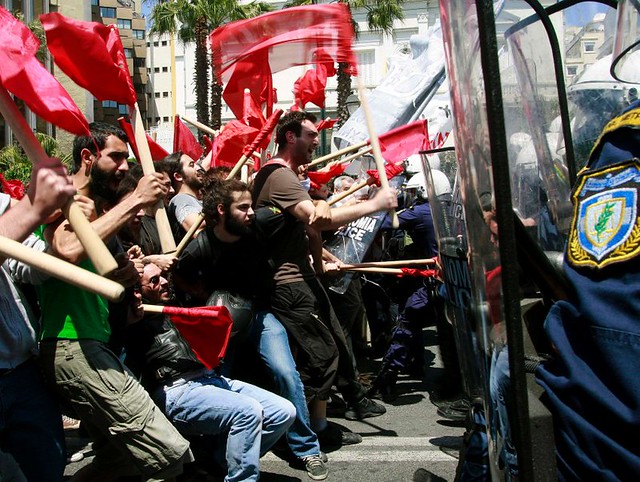
Greek protesters clash with policemen during riots at a May Day rally in Athens May 1, 2010.  Credit: Joanna CC-BY-SA 2.0

Debt = theft from future generations

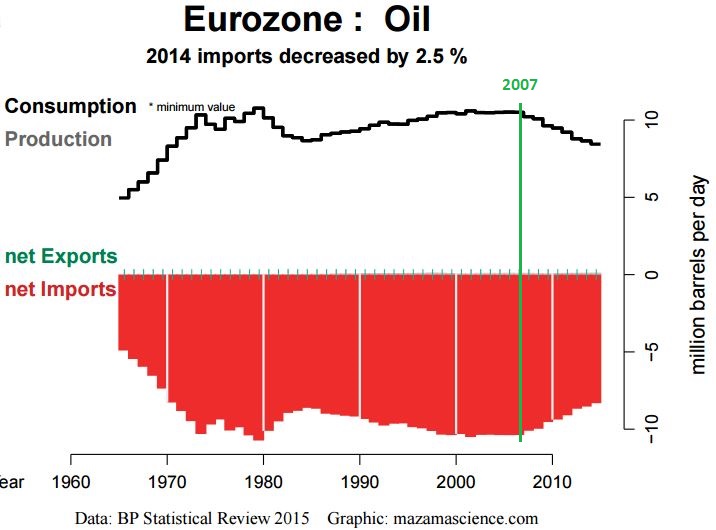
All economic activity requires energy to perform useful work. Without an increasing flow of net energy to society the economy starts to contract. The extraction of finite fossil resources cannot sustain increased growth as depletion and diminishing returns eventually leads to bankruptcy and falling supply.
eurozone.JPG
Shows how the entire Eurozone has been contracting since 2007 as is visible in lower oil consumption.

Monetization based on the assumption that the resource base is endless, which flies in the face of fundamental physics, can only lead to financial collapse. Intermediate stages that we have witnessed since 2008 is the erosion of the middle class, increased wealth inequality and increased numbers of poor people in society. Borrowing of work and resources from the future, through debt fuelled credit expansion, has become completely insane. To the extent that we are eroding the life-support systems that make up the basis for our own long-term survival. It has indebted future generations in ways they can never repay and is a grave intergenerational injustice

Thermodynamic limitations of the physical world don’t even enter the grammar of most economists or central bankers who are wilfully inept to give advice on anything but how to ruin entire nations. The lack of a systems perspective has made the public unaware of the real dangers of a out of control financial system. Economic growth based on credit fuelled debt, which has exploded since the early 1980s, in form of unlimited issuance of government bonds, credit cards without security, sub-prime mortgages or quantitative easing are all just sophisticated ways of sending the bill to the future. 

Its obvious that it's not possible to cure problems that arise from too much of something (debt) by doing more of it (piling on more debt). That's just insanity. If credit costs are larger than income minus other expenses then either the income must increase to balance losses or bankruptcy is the only way out. By now, we know that the pile of debt accumulated is unpayable and so a debt restructuring or debt jubilee is the only way forward. The young generation, especially, need to have their debts forgiven or we will have riots in the streets, political turmoil and an increase in crime rates.

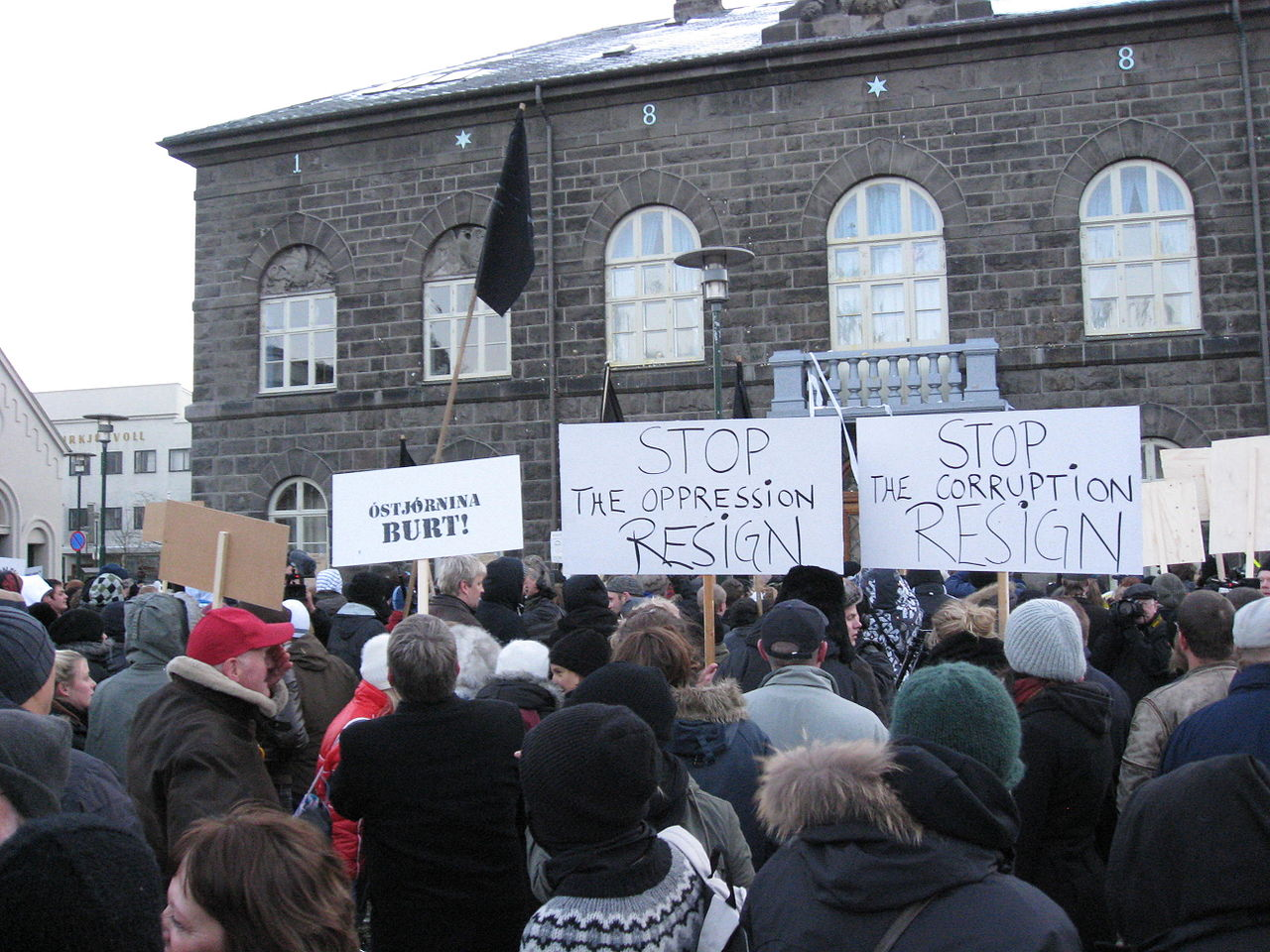
Protesters in front of the Alþingishús, seat of the Icelandic parliament, on 15 November 2008. Credit: Haukurth (CC BY-SA 3.0)

Difference between purely financial and energy-induced collapse

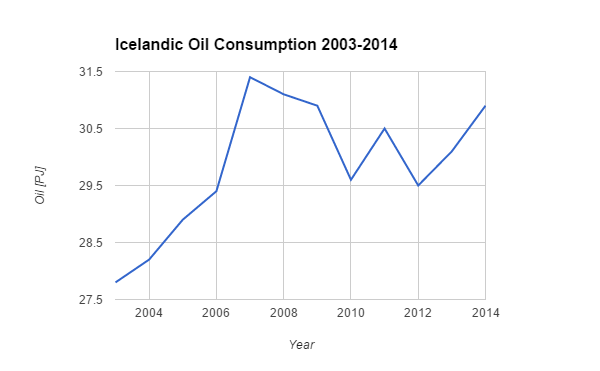
In the fall of 2008 the financial system in Iceland collapsed leading to a closure of the three main banks and a 50% fall in the value of the Icelandic króna. When the banks collapsed they left huge obligations to lenders and customers without coverage. The Icelandic government issued a guarantee for all Icelandic accounts, releasing comparative demands from a large volume of overseas accounts (a net deficit of €3.2 billion after all assets were sold). The government had no way of covering this demand, causing the collapse of the Central Bank of Iceland and the currency. Iceland went bankrupt and loans in foreign currency became unpayable for state, businesses and private persons. The Icelandic people voted no in referendums to repay foreign debts, elected different people in office and jailed bankers for corruption. They basically had to restart the system. However, the real reason that Iceland has not suffered like Greece, for example, is because they were able to keep increasing their oil consumption (from imports) while relying heavily on domestic hydropower and geothermal for electricity production. This is not the case for the PIIGS countries which all were heavily reliant on oil imports that they could no longer afford.
Data from the National Energy Agency in Iceland
Greece cannot afford to import more oil

Many of the driving factors behind the Icelandic banking crisis and the GFC arose from a fundamental systems crisis in our present world. The economic model based on eternal financial and material growth has started to meet limits, where the human civilisation has outgrown the capacities of the planet to support it. Borrowing from the future to cover up this fundamental problem is a short sighted strategy that will come to an end, sooner rather than later. And it also means that the collapse curve will be even steeper as we have depleted more resources without making a transition to renewable energy resources.

Against such limitations, all talk or negotiations are futile, and pretending the dilemma does not exist has only lead to bigger risks with ever more debt - stealing from future generations. Countries may be able to handle a purely financial crisis, like Iceland, but they won't be able to handle a energy-induced financial crisis, like in the case of Greece. It doesn't matter what financial reforms they make as long as they can't afford the energy needed to operate society they will continue to contract. So while debt forgiveness is necessary it's not sufficient in solving Greece's problems.

Water Stress in the Mediterranean Basin

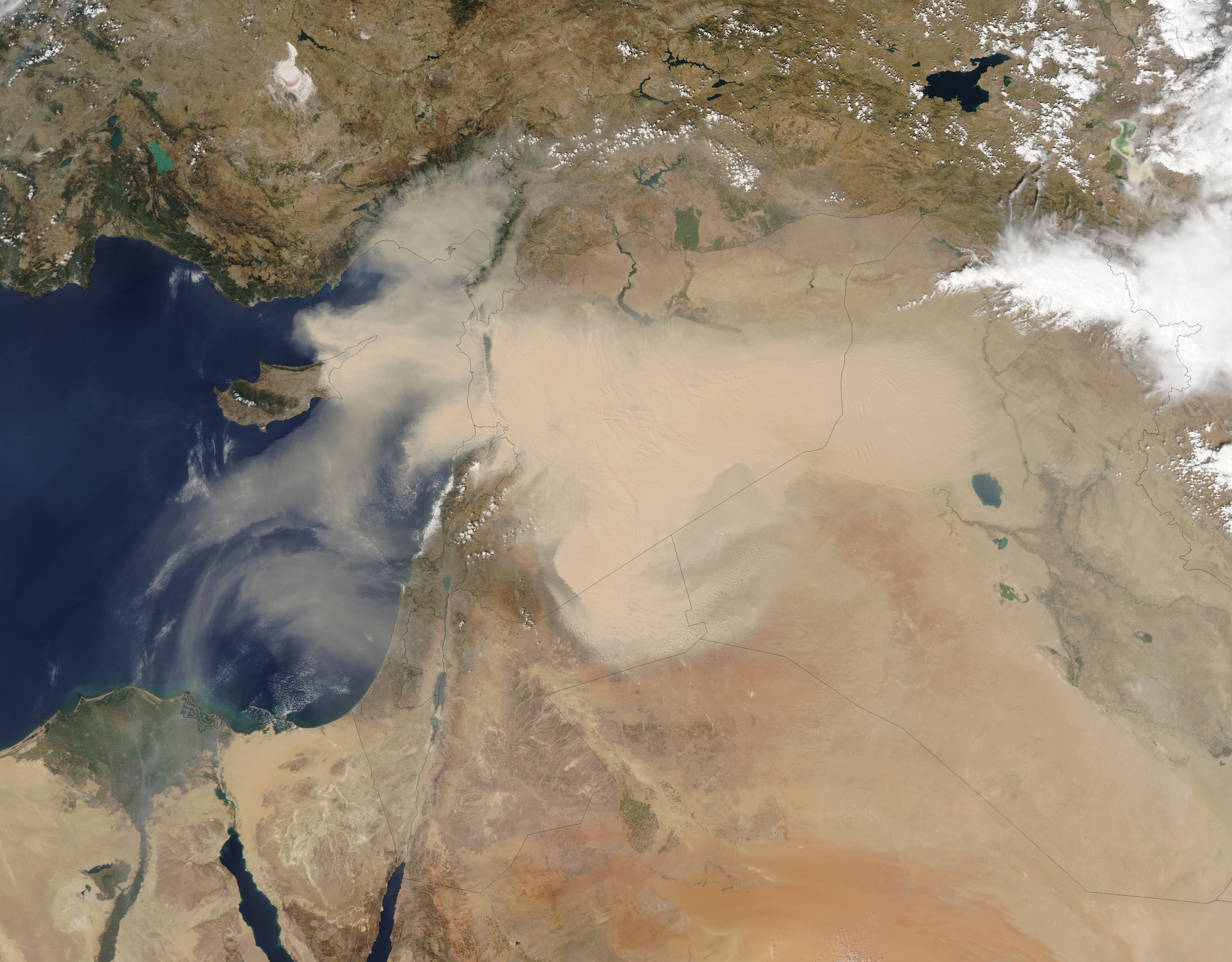
Dust storm sweeping across Syria, the Mafraq region of Jordan, and part of Turkey's Mediterranean coast (7th of September, 2015). Credit: NASA Earth Observatory- Aqua Modis
Global pressures on finite water resources have grown rapidly over the past decades as a result of population growth, increasing per capita consumption and industrial agriculture. Overexploitation of groundwater in agricultural regions of particular concern are north-western India, the north China plain, the Great Plains of North America and the Central Valley in California (Rockström et al. 2014). Climate change is already impacting the number of people living in absolute water scarcity (Schewe et al. 2013). Water scarcity is a recurrent imbalance that arises from an overuse of water resources, caused by consumption being significantly higher than the natural renewable availability. Water scarcity can be aggravated by water pollution and drought.

River basins, with withdrawals exceeding more than 40–60% of available water resources, experience severe water scarcity. Many economically important river basins around the world are suffering from unsustainable withdrawals of water that impinge on ecological needs or have surpassed ecological limits such as the Amu and Syr Darya, the Indus, the Nile, the Colorado, the Orange, the Lerma Chapala, the Murray Darling and the Yellow River basin.

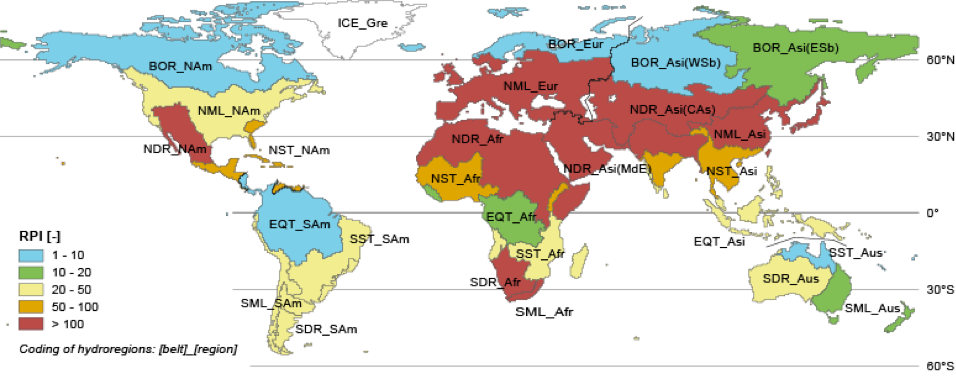
Global hydroregions - population pressures on water security


Source: Meybeck et al. 2013

The map above shows a relative pressure indicator (incorporating population density and runoff) for river basins in different hydroregions of the world. We can see that dry belts (medium density and very low runoff) around the equator and northern mid-latitude (high density and medium runoff) have the highest pressure on water security, while hydroregions with minimal pressure are due to high runoff and/or low population density (e.g. Amazon and Orinoco basin, Boreal hydroregions, Northern Australia basins) (Meybeck et al. 2013). Water security pressure range from the most to the least densely populated: Asia > Europe > North America > Africa > South America > Australia. Interesting to note is the difference between the “Old World” (Asia, MENA, Europe) and the “New World” (Americas and Australia).

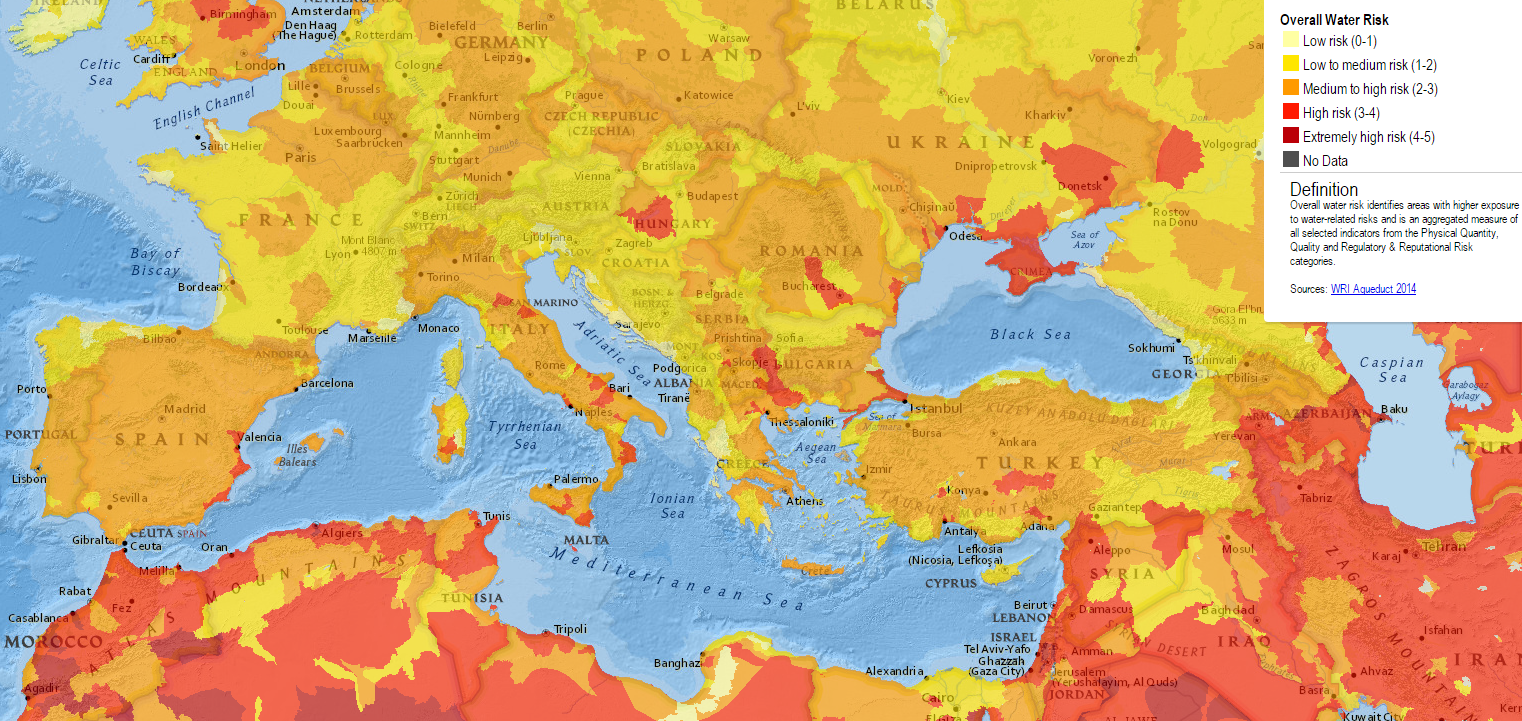
Overall Water Risk around the Mediterranean

Shows level of overall water risk (physical quantity, quality and access).
Source: Aqueduct-Water Risk Atlas

In the map above we see which countries and city regions around the Mediterranean that suffer most acutely from overall water risk. London, Budapest, Bucharest, Valencia, Naples, Odessa, Donetsk, Sofia, Istanbul all show signs of high overall water risk due to population pressure. Countries in the dry belt of North Africa and the Middle East (MENA) all show signs of high overall water risk, either from depletion of water resources, pollution or lack of access to clean drinking water.

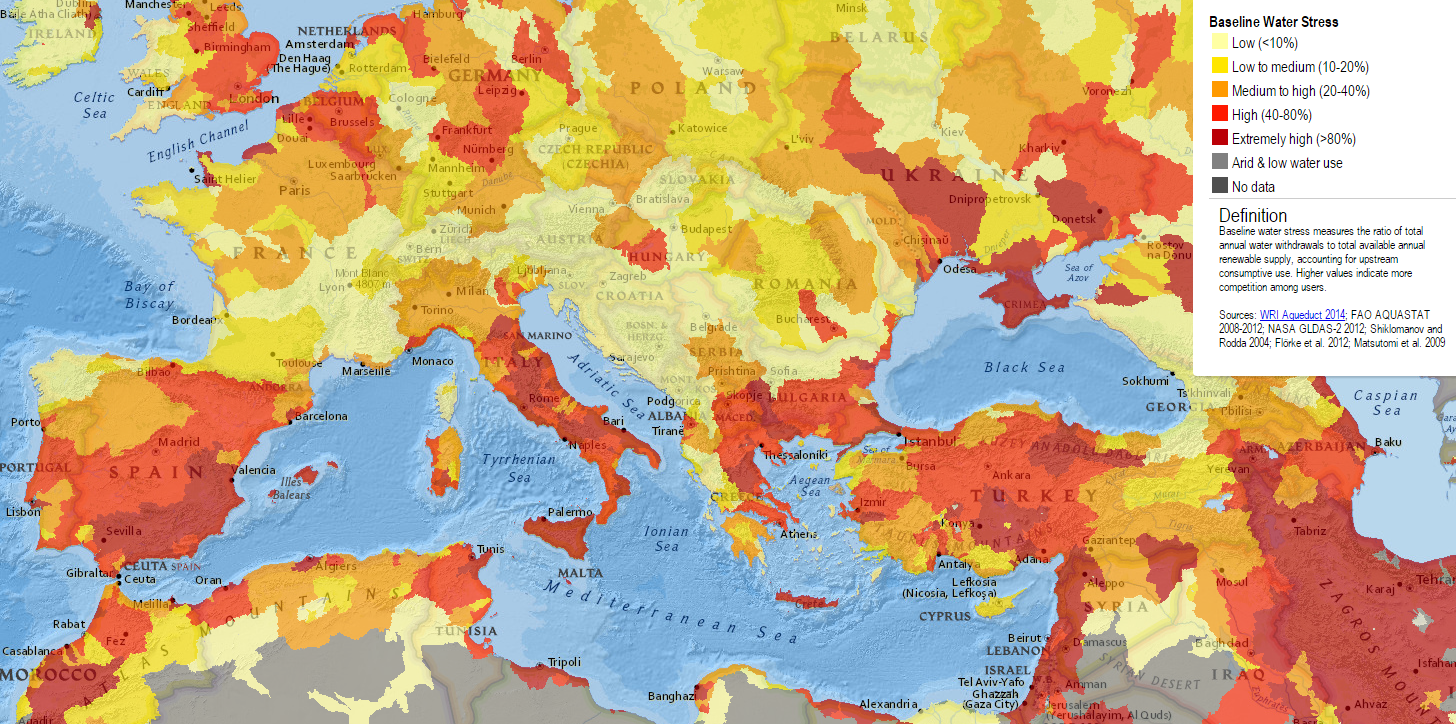
Baseline Water Stress around the Mediterranean

Shows baseline water stress (the ratio of total annual withdrawals to total available renewable supply). Source: Aqueduct-Water Risk Atlas

If we look at baseline water stress defined as the ratio of total annual water withdrawals to total available renewable supply (accounting for upstream consumptive use) we find that stress is extremely high (dark red) in parts of Morocco, Tunisia, Spain, Italy, Malta, Bulgaria, Greece, Turkey, Ukraine, Israel, Syria, Iraq, Egypt, Azerbaijan, and Iran. If we compare the map above to the one below, showing population pressure in the Mediterranean region (in 2009), we find that baseline water stress occurs around many of the big cities as expected.

Population density around the Mediterranean

Source: UNEP-Grid (2009)

City regions along the Mediterranean east coast in Turkey, Syria, Lebanon, Israel and Egypt have high population density in close proximity to each other. This at the same time as they suffer from extremely high baseline water stress is like begging for a conflict. Italy, Spain, Greece and Malta will suffer in the future if they don't do something about their unsustainable water situation immediately. Morocco, north Algeria and Tunisia will also have to address their water situation.

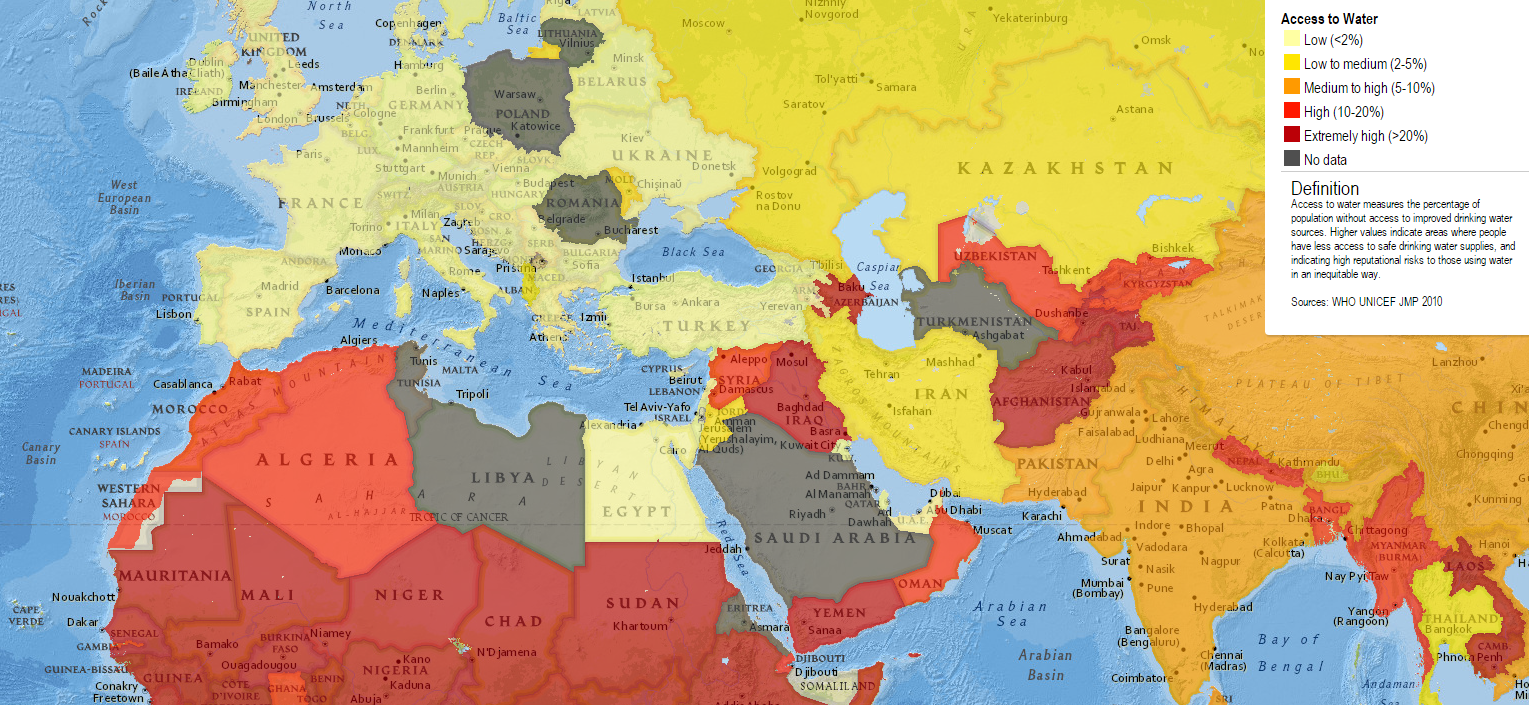
Access to Water in Europe and MENA

Shows level of water risk related to access (% of population without access to safe drinking water). Source: Aqueduct-Water Risk Atlas

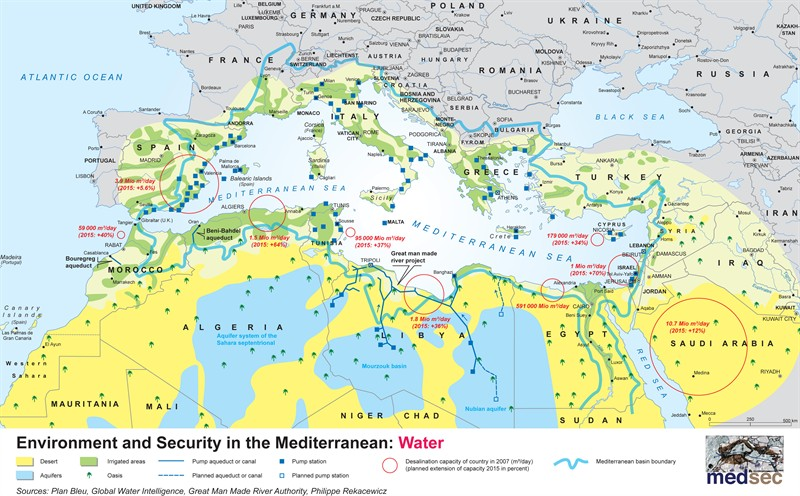
People may not perceive water stress as an issue depending on access to water defined as % of population without access to improved drinking water. Here we see the situation being severe (>20%) in countries undergoing conflict such as Iraq, Syria, Yemen, Afghanistan and large parts of North Africa. In the map below we can see that Spain, Morocco, Algeria, Tunisia, Libya, Egypt, Saudi Arabia, Israel and Cyprus all have desalination plants (red ring). This requires lots of energy, most likely from fossil fuels, that many countries can’t afford to spend and it only furthers global warming. Relying on desalinated water is a very risky strategy.

Water infrastructure around the Mediterranean Basin

Source: UNEP-Grid (2009)

From all the above pictures it is not difficult to figure out that water stress, together with climate change and peaking fossil fuels will lead to migration and conflict without any foresight or planning ahead. Water is essential for all life, without sufficient water resources people have no option but to move as ecosystems dry out. Relying on groundwater pumping and fossil aquifers with little respect for ecological limits or plans for collecting rainwater is a disaster in the making, of which we are seeing the first signs. Furthermore, explosive population growth in the MENA-region following their oil boom have lead to far more people than the arid landscape can provide for. The only reason this population increase was even possible was due to fossil aquifers now empty and massive amounts of energy from oil that has been used to desalinate water from the ocean. But these are finite resources. Thus the crisis we now see in the Middle East was foreseeable, it was only ever a question of when, not if. The German Advisory Council on Global Change reported on these risk already in 2007. Most other European countries must also have been aware of these risks. A little planning could have gone a long way but all we see now instead is chaos.

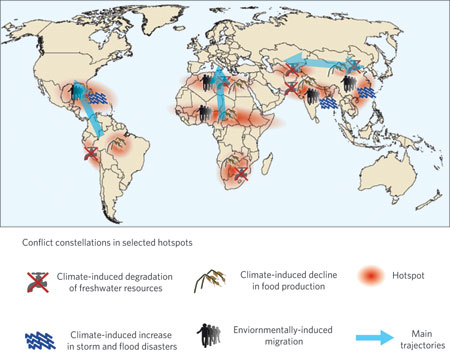
Migration pattern due to ecological degradation and climate change

Areas where drought, desertification, and other forms of water scarcity are estimated are expected to worsen and could contribute to people migrating away from these areas to secure their livelihoods. Main projected trajectories are added where climate change-related migration can be expected in the future. (Source: Bogardi and Warner, 2009).

Peatland Fires and Palm Oil


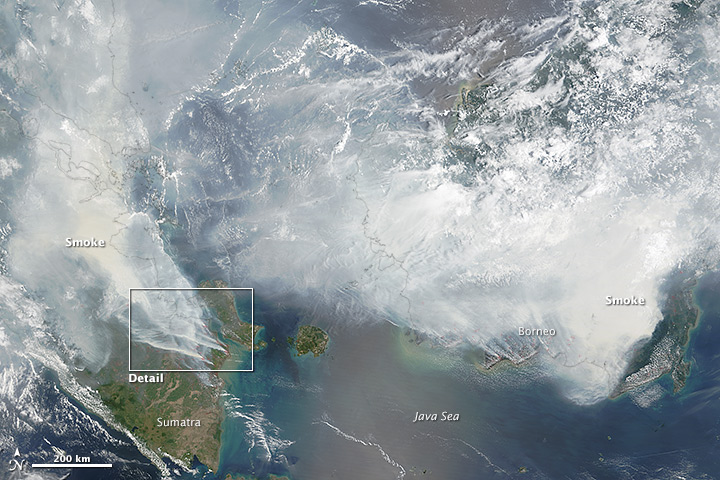
Haze from peatland fires in Indonesia (September, 2015). Source: NASA Earth Observatory

Tropical peatland ecosystems contain very high levels of sequestered carbon and are experiencing rapid degradation. This happens because population pressure and increased resource consumption lead to land use conversion and draining with rice farming, oil palm and rubber production replacing tropical peatland ecosystems. Both the use of intentional fire, with slash and burn clearing, and outbreaks of wildfires due increased dryness, which worsens during El Niño years in Indonesia, destroys peatland ecosystems that releases massive amounts of stored carbon to the atmosphere. Which rapidly contributes to further global warming.

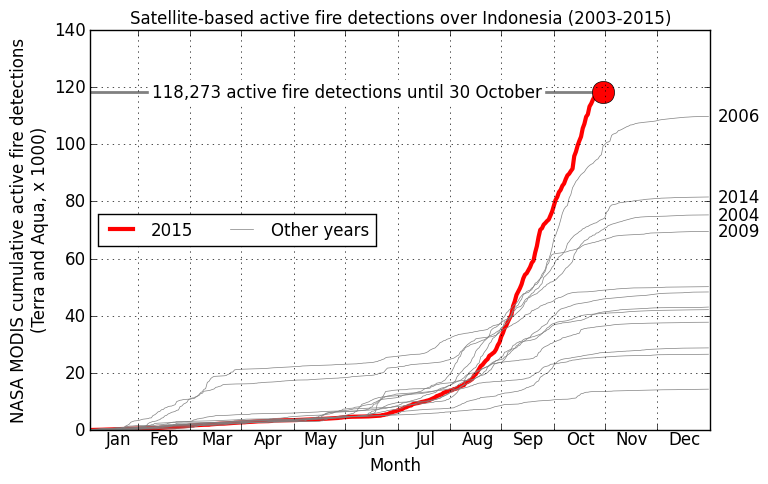
In 1997-98, during a strong El Niño, massive peatland fires across Indonesia resulted in major regional haze, millions suffering from respiratory problems, and resulting in billions in economic losses across Southeast Asia. Similarly, 2015/2016 El Niño season seems to have pushed already fragile peatland ecosystems in Indonesia over the limit with 118,273 active fires releasing 1636 metric tonnes CO2 equivalent to the atmosphere (as of 30 October, 2015). Peatland fires are not like ordinary fires due to the carbon rich soils they are very difficult to extinguish. Many times they don’t stop until heavy rains come along to help extinguish them.

Source: Global Fire Data

Much attention in mainstream media has been regarding Indonesia's poor land management policies during the last 30 years. However, in a resource scarce world with a growing population and increasing consumption of fat/oils everything from crackers to soap and biofuels this was bound to happen. There is no such thing as “sustainable palm oil” since it uses more resources (energy) than it can produce and at huge environmental costs (not accounted for!). It’s like trying to argue that “fracking” is sustainable, which of course is ludicrous. So anyone buying palm oil products is part of the problem, and claiming otherwise is hypocrisy.

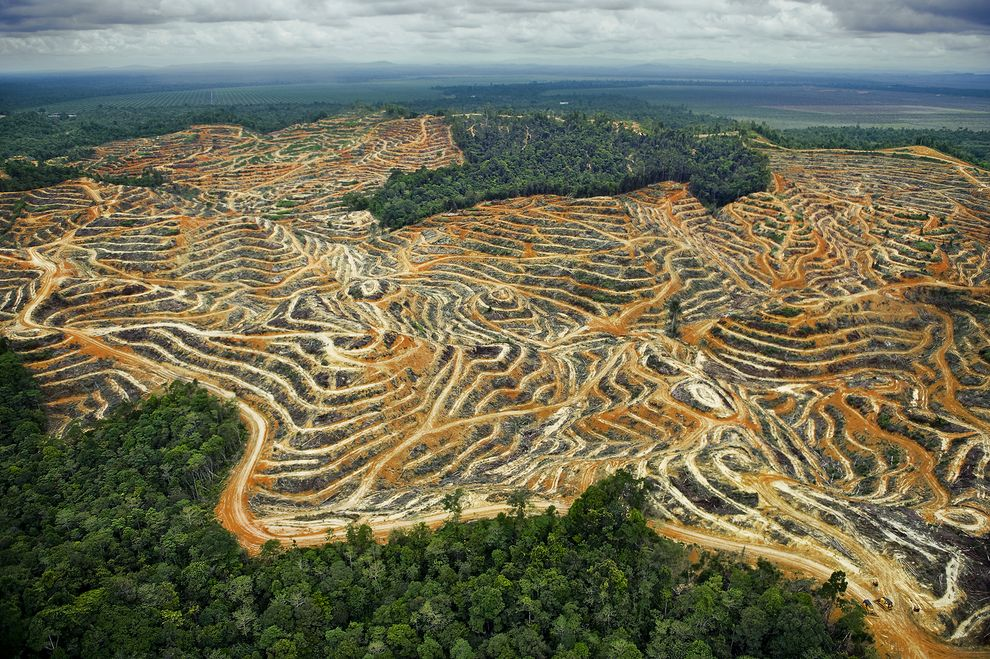
Access roads and terraced fields destroy orangutan habitat in Borneo's lowlands.Photograph by Mattias Klum, National Geographic Creative

There are over 300,000 different animals found throughout the jungles of Borneo and Sumatra, many of which are injured or killed during deforestation. Palm oil development increases accessibility of animals to poachers and wildlife smugglers who capture and sell wildlife as pets, use them for medicinal purposes or kill them for their body parts. Government statistics has shown that over 50,000 orangutans have already died as a result of deforestation due to palm oil in the last two decades. Mother orangutans are also often killed by poachers and have their babies taken to be sold or kept as pets, or used for entertainment in wildlife tourism parks. Other species like the Sumatran Tiger, Sumatran Rhinoceros, Sun Bear, Pygmy Elephant, Clouded Leopard and Proboscis Monkey has also suffered greatly.

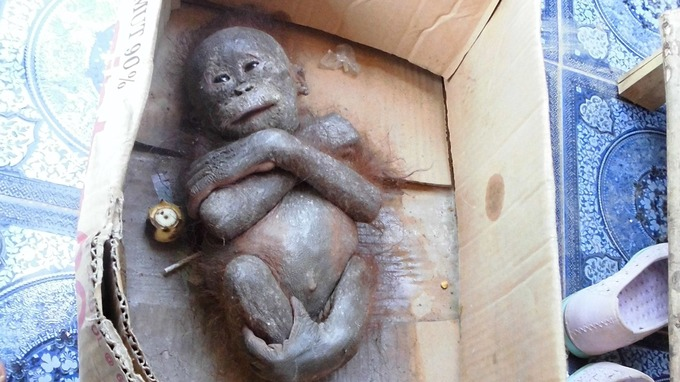
Gito was found lying in a urine-soaked box with severe hair loss and grey and flaking skin.
Credit: PA
The Union of Concerned Scientists released a report in April (2015) scoring America’s top brands usage of palm oil, including worst brands like: KFC, Pizza Hut, Taco Bel, Wendy’s, CVS/Pharmacy, Dollar General, Dollar Tree, Target, Costco wholesale, DQ’s, Domino’s. I suggest people boycott these companies, and palm oil in general, there are other and much better vegetable oils that one can buy from more local sources.

Higher CO2 pollution in the North during winter

DSC_1065.JPG
Autumn leaves. By: Linda Bergqvist

Seasonal CO2 levels in the North visible from space

I was out walking and photographing landscapes thinking how the air felt much “dirtier”, as in more polluted, and remembered that the Northern Hemisphere actually have higher CO2 values (ppm) in winter time due to loss of photosynthesis. NASA released a really good illustration of this last year shown below.


In the video we can see, for the year 2006, how plumes of CO2 shift as winds disperse gasses away from the original sources, mainly located in the Northern Hemisphere were a majority of the global population is located. We also see how CO2 levels go up and down in the Northern Hemisphere along with the growth cycle of plants and trees.

For people in the Northern Hemisphere, especially between 45 to 70 º N latitude, we can see a change in the greening of ecosystems with earlier springs and later frost. In other words, humans are not only increasing the overall CO2 levels over time but also causing seasonal changes due to global warming. The rate of temperature increase in Sweden has been double that of the global average. The change in seasonal vegetation cover is particularly visible in northern Sweden where warming has been more pronounced.
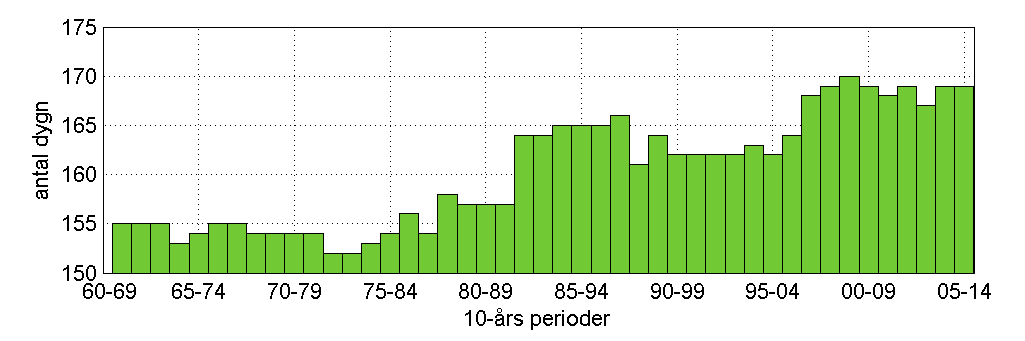
The graph shows number of days with increase in vegetation, averaged over a ten year period, in northern Sweden. From 1960s until 2014 we have observed a 14 days increase. Source: SMHI
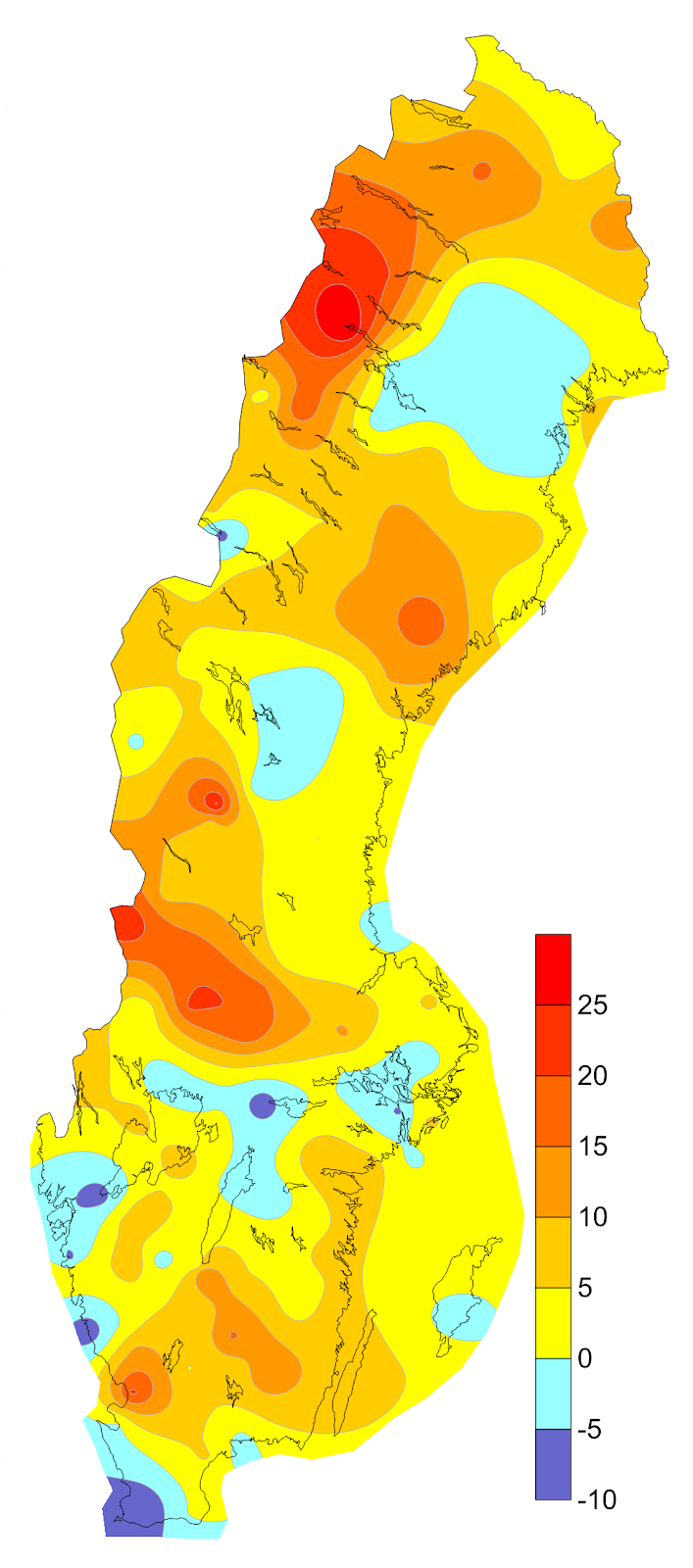
After 1990 the first frost days in Autumn has started arriving later, on average. Days of earlier frost should be interpreted with care as the location of measuring stations may impact the results.
Differences in number of days after 1st of July when first frost of the autumn arrives. Between periods 1991-2013 and 1961-1990. Source: SMHI

Human health impacts

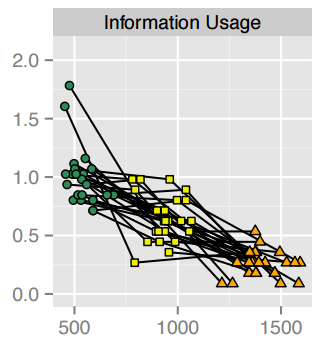
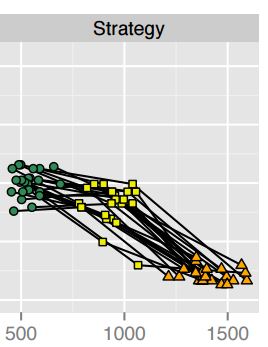
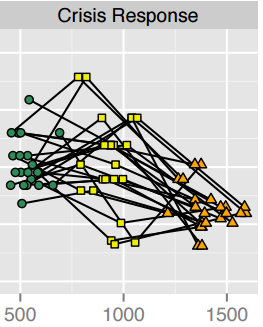
Except the serious ecosystem impacts these changes have, such as alterations in blooming, mating and migration patterns, what are some of the direct human health impacts? Well, according to a recent Harvard study elevated CO2 levels negatively impact human cognitive function. The study conducted controlled experiments inside office buildings, where values often are high, measuring cognitive ability under different CO2 levels (ppm) and found that, on average, participant’s cognitive scores dropped significantly with values above 500 ppm. According to the study, impacts on crisis response, information usage and strategy (which are indicators of high level cognitive function and decision-making) were all greatly reduced under high CO2 values.
Cognitive score (y-axis) and CO2 levels ppm (x-axis).

Baseline values are the same as outdoor values, i.e. around 400 ppm, and indoor values of 200-400 ppm higher than outdoors are unfortunately commonplace. As one would expect it's worse in big cities, where CO2 levels are higher. Poor ventilation can thus have major impacts on worker productivity and health. Still, we don't know the threshold at which CO2 levels begin to measurably impact human cognition. Some studies have pointed towards a threshold of 600 ppm but the safest way to proceed is simply by lowering greenhouse gas emissions, while we still are are smart enough to do so.