The Rise and Fall of the Swedish Empire
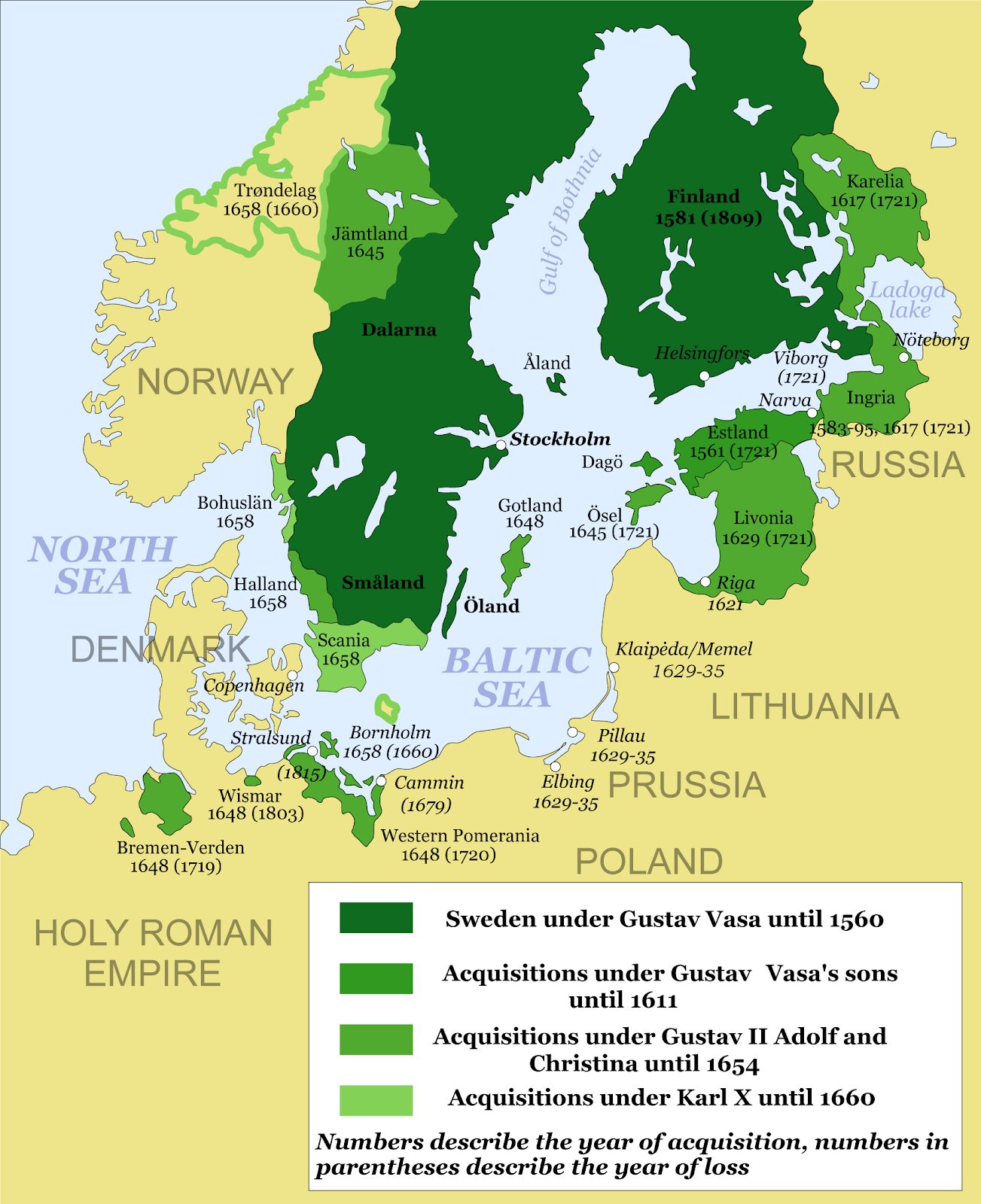
The Swedish Empire in Early Modern Europe 
Credit: Memnon335bc (CC-BY-SA 3.0)

How forests and metals changed the country


From 1560 to 1720, Sweden was the most powerful country in Northern Europe, based mostly on its very productive metal mines (silver, copper, steel) but also on aggressive foreign policy backed up by high-quality steel weapons. The production of these mines and weapons required large amounts of energy for mining and smelting. Wood and charcoal were the primary energy carriers used in those days but required large tracts of forests. 

During this time (1650-1800), Sweden changed it's property laws and went from public to private ownership of forests since forests were mainly used for household consumption, without clear ownership rules, and didn't generate any economic value. This changed forestry incentives.

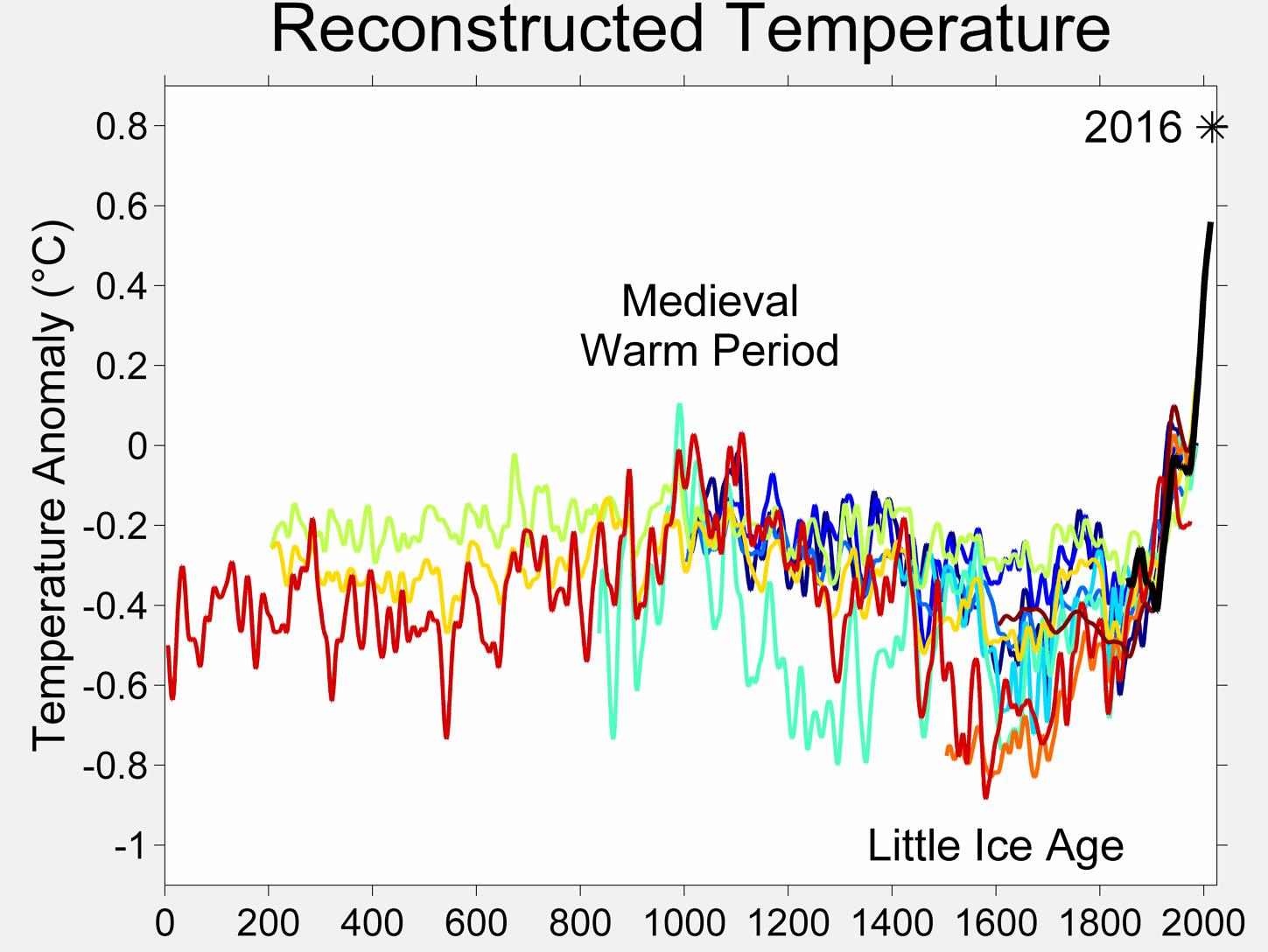
Moreover, the little Ice Age, at its worst period in 1500-1600s, resulted in failed harvests and starvation that made European countries more aggressive towards their neighbours in attempts to expand their land area, as to grow more food. But the cool period also helped the Swedes in terms of enabling them to be able to cross the frozen sea from Germany and defeat Denmark in 1658.
Credit: Saperaud~commonswiki (CC-BY-SA 3.0)

According to Sundberg (1992) a typical forester and his family were self-sufficient on 2 hectares of farmland, 8 hectares of pasture and 40 hectares of forest which in turn generated some 760 GJ (or 211 MWh) of charcoal per year for the mines. That gives an EROI of roughly 4:1, i.e. very low return on investment, according to Hall (2015). As with all finite resources, the Swedish mines reached a peak in production in 1632, according to Sverdrup & Ragnarsdóttir (2014). Fifty six years later, in 1688, the Swedish Empire reached it's wealth peak, after which costs got larger until they exceeded wealth in 1712. Observed collapse occurred between 1732 and 1750.

Empire
Discovery peak
Resource Peak
Wealth Peak
Cost > Wealth
Collapse
Swedish
1520
1632
1688
1712
1732-1750

The biomass-backed system was sustainable as long as the forests were not overharvested, which did not occur until the middle of the 19th century, a time when many Swedes (1.3 million) left for America. During this time (1800-1850) the population had increased at a time when property prices were sky high and people started overharvesting the forests.

Source: SIFI
Today many experts estimate that Sweden has regained a forest area similar to that of the early 19th century, before the massive deforestation took place. Some 27,528,000 hectares, or 67% of the country is forested. However, it is a completely different type of forest. Only a few percentages (17%) of the old forest has been preserved, the rest is planted forest with much lower diversity of species and ages. Our forests are thus less resilient to shocks and disturbances, for example to climatic changes, something people hadn’t really noticed until the massive forest fire that broke out in Västmanland in 2014.
Global warming vs collapsing AMOC

What if the AMOC collapsed?

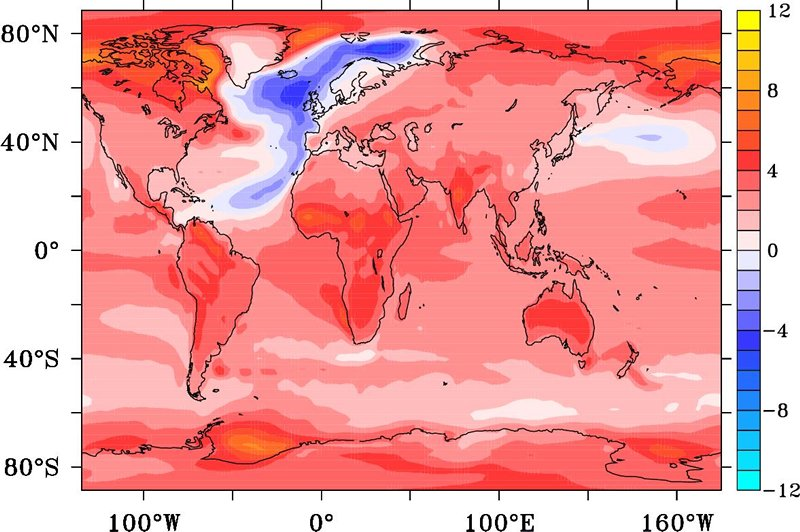
Climate change can give rise to abrupt and unexpected outcomes in the Earth system. Last week, a new article in Nature Scientific Reports claimed that a collapse of the Atlantic Meridional Overturning Circulation (AMOC) could lead to a rapid cooling in the Northern Hemisphere, and that this cooling in turn could obliterate global warming for a period of 15-20 years. Only to revert to a warming pattern some 40 years later.

According to professor Sybren Drijfhout, his model showed that “The planet earth recovers from the AMOC collapse in about 40 years when global warming continues at present-day rates, but near the eastern boundary of the North Atlantic (including the British Isles) it takes more than a century before temperature is back to normal.


Temperature anomaly in degrees Celsius after 95 years from the onset of an AMOC collapse. Source: Drijfhout (2015)

What is so scary about this study is that the effect of atmospheric cooling due to an AMOC collapse is associated with heat flow from the atmosphere into the oceans, which has actually occurred during the last 15 years. A well known fact to many scientists but somewhat unclear to the public which has been bombarded with climate deniers "warming hiatus" nonsense.

According to Drijfhout, when there is a net cooling effect heat flows from the oceans to the atmosphere but when there is net warming effect then this energy flow is reversed. In other words, the world’s oceans have acted as giant heat sinks, counteracting the greenhouse effect in regards to atmospheric temperatures, for the last decade. But this period is now over, according to Drijfhout. The oceans are again releasing heat, amongst others due to shifting ocean and wind patterns and a strong El Niño.

3 million Europeans say no to TTIP

The People vs Empire

On  the 6th of October, the self-organized European Citizens' Initiative against TTIP (Transatlantic trade and investement partnership) and CETA managed to pass the goal of getting more than 3 million people to sign the citizen petition against the secretly negotiated and highly controversial trade deals between Europe, the US and Canada.

Mehr Demokratie. Credit: Kurt Wilhelm (CC-BY-SA 2.0)

With reference to major risks of the ISDS clause (corporations suing states), lowering environmental standards and worker rights, deregulation of public institutions and infringement on internet freedom, the initiative wants the negotiations to be stopped.

Yesterday, citizens all over Europe went out to demonstrate the undemocratic so called trade deals, attracting hundreds of thousands of people in Berlin. The biggest protest in Germany for many years. Demonstrations also took place in eight Swedish cities.

One of the most common arguments for TTIP is that "there will be more growth and jobs" through, for example, removing safety procedures (crash testing) in the automobile industry which according to a recent study could lead to a drastic increase in traffic-related deaths in Europe (since a European car is 33% more safe than the American counterpart). In other words,  it would generate more financial capital for the big multinationals at the expense of ordinary Europeans' health and safety.

According to a leaked document, published on Corporate Europe Observatory (20th of April, 2015), murky negotiations of "regulatory exchange" that would force laws drafted in any of the 78 states to go through a screening processes by a technocratic elite has taken place without public knowledge. This screening process would be done by a bunch of lawyers and lobbyists, in form of a permanent, undemocratic, and unaccountable group of technocrats. Most people think this type of group only will serve to uphold the interests of multinational corporations. 

According to attorney David Azoulay, at the Centre for International Environmental Laz, "Not only will it extend an outrageously burdensome process on future legislation, but any current legislation in the public interest that doesn't sit well with trade interests on either side of the Atlantic could be subjected to the same process to make it conform to corporate interests"

In summary, this is the response of a predatory Empire, and it's elite, to a world without growth. It starts cannabilizing on the very foundation that underpins it, ordinary people and nature. Now is the time to change the entire system, or crumble under it.

Help! Colossus has taken over the planet

We need to talk about energy and population

I was listening to the latest Radio Ecoshock show, featuring Stanford biologist Paul Ehrlich, when I realized that I haven’t really mentioned the population problem as much as I should in this blog. Indeed, the topic is problematic because people don’t like to talk about it and most environmental scientists have even given up speaking about it since most feel that “there is nothing we can do about it”. To some extent that’s correct, we cannot force people to have fewer kids (or we don't want to do that).

However, by voluntarily lowering energy use per capita it could lead to fewer kids, and it's better to plan for such a future than to be forced into lowering ones energy usage by “other means” (poverty, famine, war etc.). Throughout history, the expansion of the human population resulted from a steadily growing energy supply. But this increase came from finite fossil energy, that have (2006) or is about to peak, globally (2015-2020). My contention is that an average human living a western lifestyle, of massive over consumption, could lower his/her energy use and still have a perfectly okay life.

From Ape to Colossus

According to William R. Catton (2009) calculations the 3 million humans around 35,000 B.C. only used enough energy (food and wood for fire) to be equivalent to Common Dolphins.
Credit: Chris_huh (CC-BY-SA 3.0)

In 8,000 B.C., when there were an estimated 8 million people who made some use of animal power, wind, and river currents each human was on average equivalent to a somewhat larger Atlantic Humpbacked Dolphin.


By 1500 A.D. there were 350 million humans, each the average energy equivalent to the still larger Risso’s Dolphin.
Credit: Chris_huh (CC-BY-SA 3.0)

In 1800 A.D., as the Industrial Revolution was just beginning to exploit fossil energy there were almost 1 billion humans, each on average now the energy-converting equivalent to a Beluga Whale.


From this point on many of the world’s people, especially the rich, would as fossil fuel users become “colossal” in terms of energy use. By 2000 A.D. the human population reached 6 billion with an average per capita energy use of more than a dozen times that of our old ancestors. By this time, an average American were using as much energy as a full grown Sperm Whale. Only there were 300 million of them.


Credit: Kurzon (CC-BY-SA 3.0)


And finally, by 2009 A.D, Catton estimated that an average American used as much energy as a 41 ton heavy dinosaur. Turiasauris is among the largest dinosaurs known at 36-39 m in length and with a weight of 40-48 tonnes.

Credit: Matthew Martyniuk (CC-BY-SA 4.0)

Currency war could pop the Swedish housing bubble

"You cannot permanently pit an absurd human convention, such as the spontaneous increment of debt [compound interest], against the natural law of the spontaneous decrement of wealth [entropy]" - F. Soddy (Cartesian Economics, p. 30).
Credit: Brocken Inaglory CC BY-SA 3.0

Currency war and deflation

The Swedish Central bank (Riksbank) have cut the repo rate to -0.35% and bought another 30 billion SEK in government bonds in the belief that this will stave off deflation (i.e. import inflation). Which it won’t, since the global economy has taken a downturn and it looks like most economies now are facing recession or depression due to the deflationary collapse of commodities, capital spending and global trade. Most intelligent people know that GDP growth is over, since we live on a finite planet, and the reason for this latest bubble had to do with private sector borrowing to inflate consumption rather than productivity increases in the real economy. What professor Didier Sornette at ETH Zurich calls “The illusion of the Perpetual Money Machine” (2012).

Original Meadows et al. (1972) modified by Ragnarsdóttir et al. (2015)

Housing bubble ponzi scheme

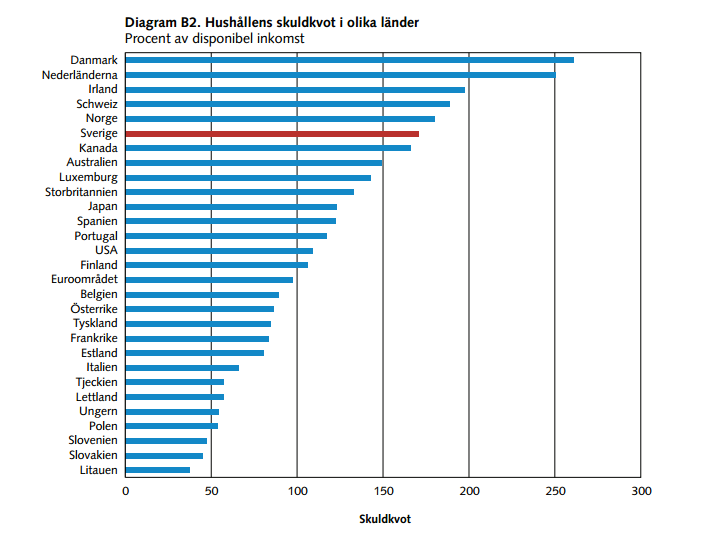
The Riksbanks policy will not win over deflation (there are no winners in a global currency war), however, it will fuel the already overheated housing market in Sweden, with a risk of popping this bubble. The ultra-loose monetary policy will encourage Swedish households to take on more debt, despite them being overburdened by debt already. Household debt to disposable income is currently at 172% (see diagram). One can compare this to the famously over leveraged American households before 2008 which topped out at 130% of disposable income.

Household debt to income for various countries in 2014. Source: Riksbank (2015)
There should be plenty of people around today that actually remember the devastating property crash of the early 1990s, but it seems like most people have a short memory. In the early 90s the government had to step in and nationalise the banks while increasing public spending to keep the economy alive in the midst of soaring unemployment. It took at least a decade for the economy to recover and the state to restock its finances after that.
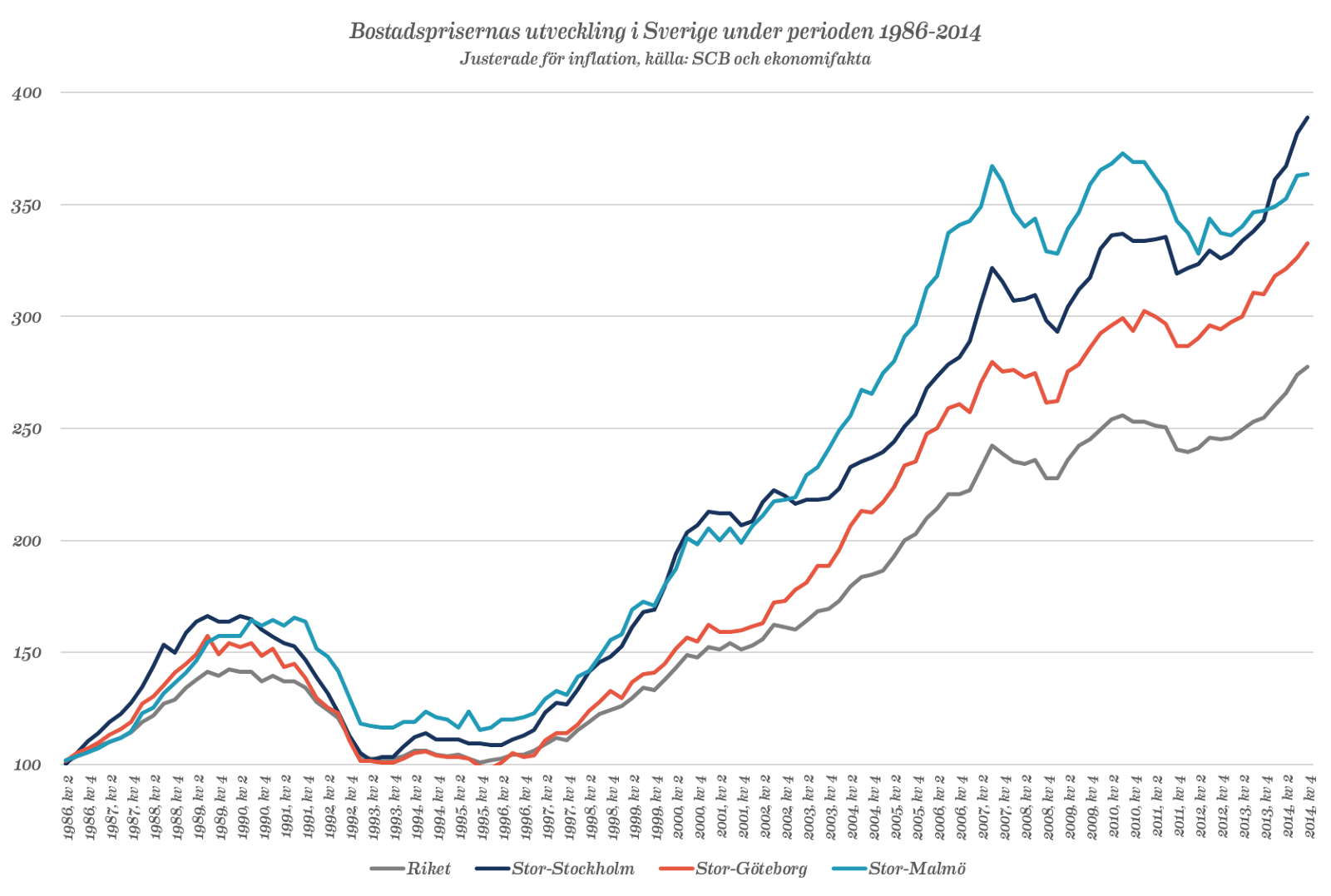
Property price index in Sweden (1986-2014) adjusted for inflation. Country average (grey), Stockholm (black), Göteborg (red), Malmö (blue). Credit: Rika Tilsammans
Sweden’s present housing boom started right (2000) after the recovery from the crisis in the 1990s. The boom was set off by low interest rates and a massive expansion of the financial sector with increasingly lower standards for issuing credit/loans. This have driven up prices to extreme levels, mainly in Stockholm, Göteborg, and Malmö, effectively forcing more people to borrow to afford housing in the inner cities. Property prices have been rising 8-9% per year on average for almost 20 years. During the last 12 months, prices have risen by 12% (average price per m2 SEK 32,692).
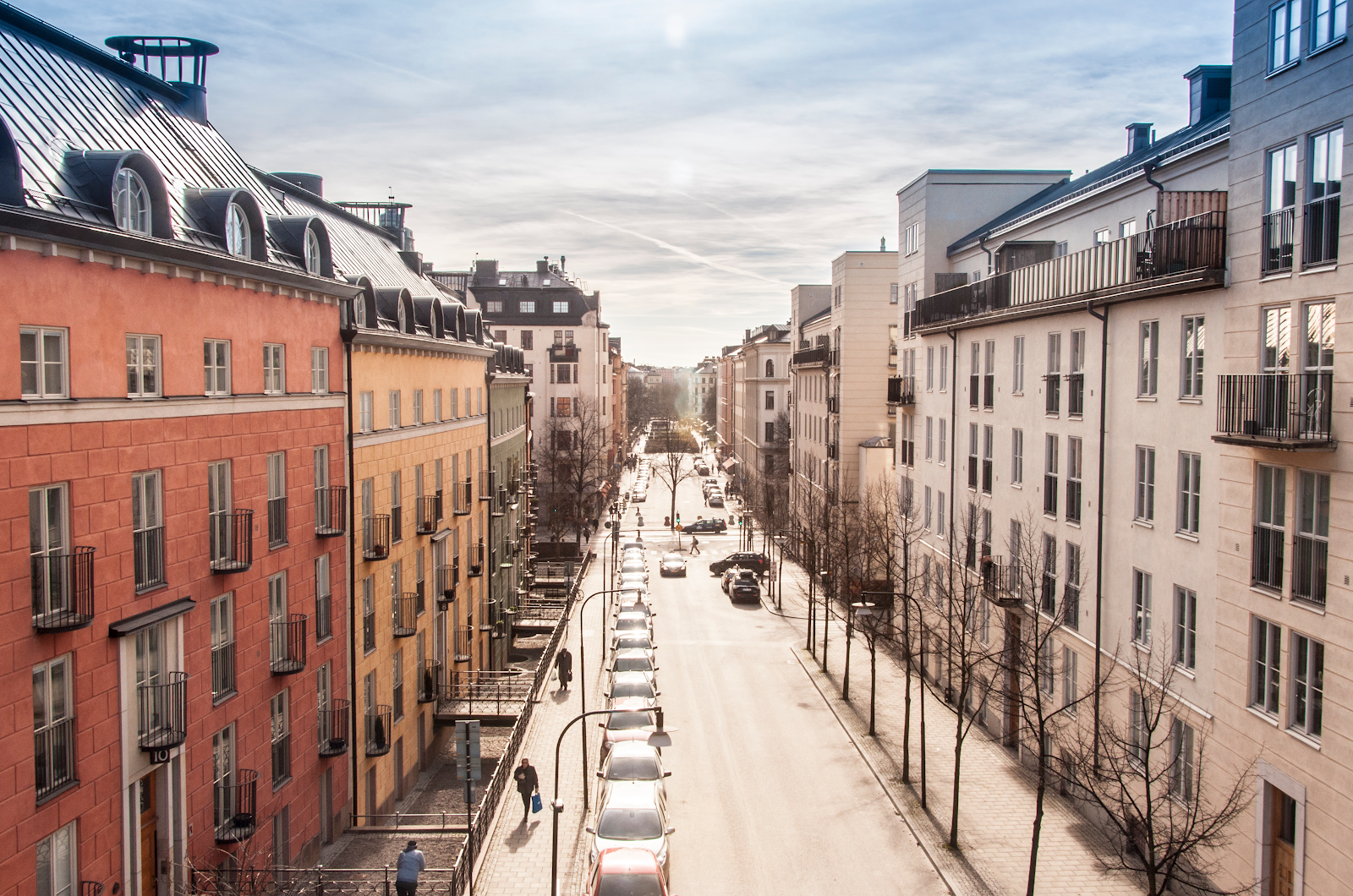
Sankt Eriksområdet, Stockholm. New Urbanism. Credit: 199pema (CC-BY-SA 3.0)
Even after 28 years of queueing it is impossible to get a rental flat in Stockholm. So plenty of people, or rather their parents, take on loans of SEK 1-3 million to buy a flat as small as 20-40 m2. Of course not everyone can afford to do that, so it's mostly the rich kids that stay in the city centre, in Södermalm, where all the other hipsters are. No integration there! Most of these youngster don’t have any savings. The only thing they have is their flat, speculating that asset prices will rise, seeing it as an “investment”. But of course it’s not real wealth, it doesn’t contribute to the real economy in any way, all it does is inflate property prices further.

Now, finally, mainstream media and Swedish authorities have started issue warnings about the housing bubble and a potential crash. Of course it’s too late to avoid it now. I guess everyone just love rising housing prices, no wonder since it's private and household debt that has driven GDP growth over the last decade in Sweden. So much for Anders Borgs famous “Swedish growth miracle”! Borrowing consumer demand from the future through credit creation is not equal to creating real wealth, it just implies we will be poorer (can consume less resources) in the future. After all, we live on a finite planet.

Oil supply shock, food shortages, and potential starvation in Sweden?


In 2013 the Swedish Institute of Agricultural and Environmental Engineering (JTI) released a report about potential impacts on the country’s food supply from sudden oil import shocks. JTI looked at three different scenarios, where oil imports would be redistricted (-25%, -50%, -75%) for a period of 3-5 years. Not enough time to make a transition to some other fuel. 

In the worst case scenario, where 75% of oil imports disappear, the authors stated that the diesel price could increase to some SEK 160/litre, and we would likely experience widespread starvation! Food supplies, in stores and warehouses, would only last for 10-12 days. Swedes don’t even know that the government has said that it’s up to the citizens themself to provide for their own food needs in a crisis situation. Most people seem to believe we still live in the 1970s when Sweden was a socialist country, not any more, not since the neoliberals came into office and started dismantling healthcare, defence, education etc. There is no emergency preparedness!

Without fossil fuels (oil and gas) we wouldn't be able to produce enough food in Sweden. This is partly due to our high food imports (50%)​, large-scale mechanisation of farms, loss of small-scale farmers and high costs (taxes) on farming. Most farm machinery runs on diesel while oil is used for heating and transportation. Areas like Stockholm and parts of Norrland are especially dependent on food imports. For example, the Stockholm region only produces some 5% of the milk consumed and less than 10% of the meat.

Today there are no food or fuel reserves, instead the entire country is totally dependent on “just-in-time” supplies. Again, in the worst case scenario, there will be no cooking oil, 75% less fruits and berries, 67-70% less grains, 40% less milk, and 64% less pigs, chickens and eggs. The only thing increasing is sheep and cow meat since a lot of land only will be used for grazing.

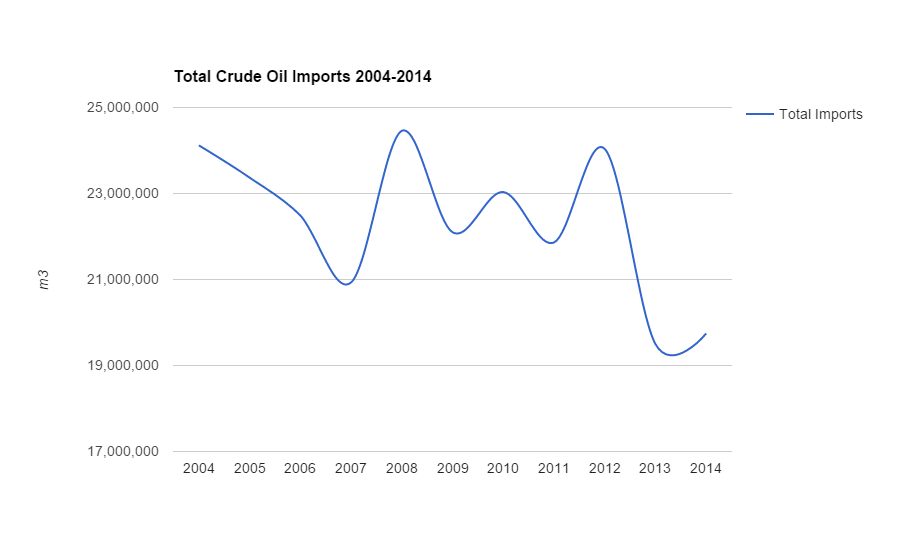
Based on SPBI data

Swedes can be kept over the starvation line if only 25% of oil imports disappear, but we will experience food shortages and risk of starvation if a larger oil shock occurs (50-75%). Looking at the export-import data some commentators have estimated that 90% of all oil imports will be gone by 2030. And this is probably a conservative estimate since it doesn’t account for sudden shocks due to an economic crisis, conflict, and so on. 


In a recent opinion poll (2013) two out of every three (63%) Swedes stated that they wouldn't be able to handle a shorter crisis. People in Gotland, Öland (islands) and Småland were most worried about a future crisis (49% think they will experience a crisis). Most people (58%) can only manage for about one week but it's likely that the respondents underestimate how much resources are actually required for everyday life. For example, water (3 litres/day) and heating during the winter.


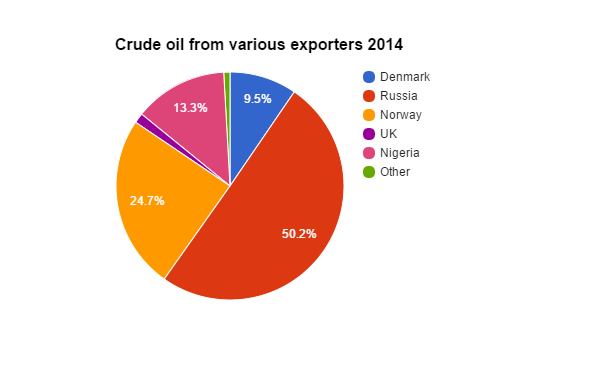
Sweden's food supply is in any case extremely vulnerable to a shortage in oil imports, and Swedes are not prepared despite a lacking government. Our dear politicians have absolutely no plan on changing this, instead they claim “we need to stay competitive” totally missing the point that growth is over! (0.3% per capita GDP growth the last decade). The situation is not made better by half of all our oil imports now coming from Russia that we are engaging in trade wars with (sanctions etc).