Showing posts with label El Niño. Show all posts

Nine Meals Away from Anarchy


Venezuela has rapidly devolved into utter chaos as hyperinflation, black outs and lack of basic goods are having ever more serious effects on its inhabitants. Doctors are fleeing the country, people are looting grocery stores and killing cats, dogs and doves for food. 

Hunger destroys social order as desperate people take desperate steps to secure food for survival. If people go hungry for too long a revolution is likely. 


Relying on a ‘just-in-time’ delivery system in a period of financial collapse is like begging for social upheaveal in my mind. There is no redundancy at all if the food supply chain is interrupted, at most grocery stores keep some 3 days of inventory. After that, people start bartering and looting until the situation becomes so unbarable that they revolt or flee to another country.

Lack of food security is also caused by a shifting climate with more extreme weather events (e.g. stronger El Niño, more severe droughts) leading to crop failures and people flooding into already overpopulated cities. Creating social unrest as unemployment and crime grows. A situation that occured in Syria just before the civil war broke out. 

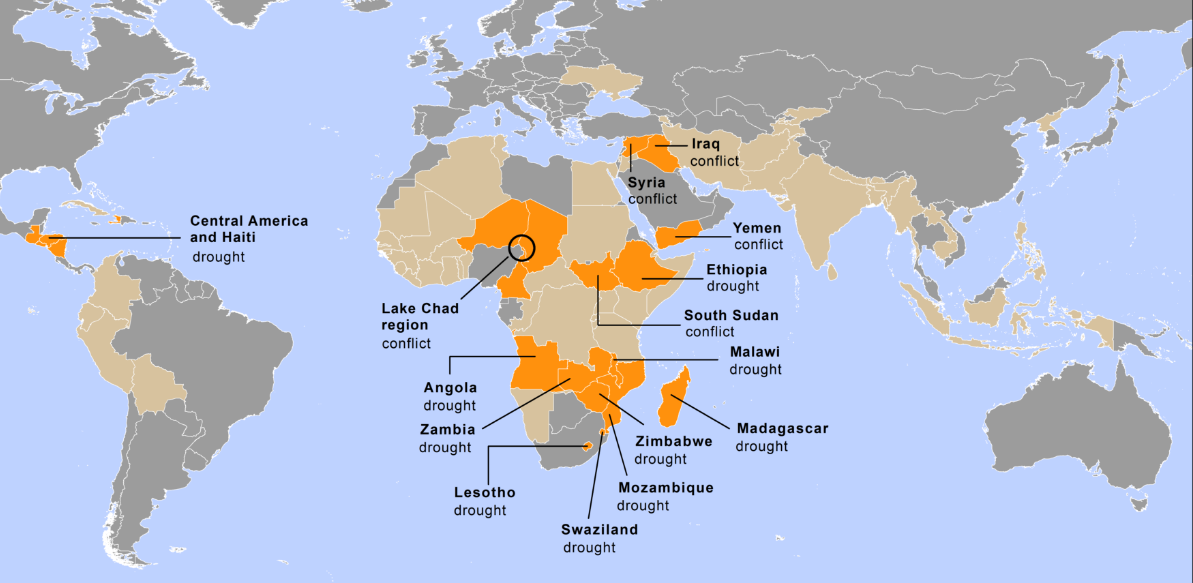
According to the latest Global Food Security Update (March, 2016) by the World Food Programme we can see (in the map below) how hunger hotspots are concentrated around the equator in very dry regions, in areas of conflict and countries vulnerable to changes in rainfall patterns due to El Niño. 

For example, food insecurity in Syria have reached alarming levels as most people struggle to find food or the money to buy food. Some 13.5 million people in Syria require protection and humanitarian aid. In Yemen, 56% of the population, i.e. 14.4 million people, are food insecure. In South Africa 31.6 million people have been affected by the poor rainy season due to El Niño. Ethiopia is also suffering from El Niño-induced droughts and some 10.2 million people are currently in need of food assistance.

Food Insecurity Hotspots (orange), WFP presence (brown). Source: World Food Programme, March 2016

Many commodity exporting countries relying heavily on oil for government income and spending (e.g. Venezuela, Niger, Iraq, Angola) are suffering major economic problems due to peak production, rising extraction costs and lower market prices. This is true also for countries like Russia, Saudi Arabia, Brazil and Canada. The less diversified a country is the more vulnerable they are to market shocks.

The Great Barrier Reef in Danger


Satellite image of the Great Barrier Reef.
Photo Credit: NASA | Wikimedia Commons
The Great Barrier Reef stretches 2,300 km down the eastern coast of Australia. Covering an area the size of Italy it is the largest coral reef on the planet. With over 1500 species of fish, 600 coral species and 30 different whale and dolphin species, it is one of the most biodiverse and complex ecosystems on the planet.

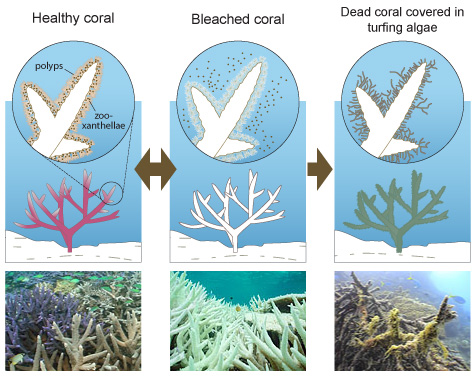
Two weeks ago I wrote about the mass bleaching event that had struck the Great Barrier Reef due to extra warm ocean waters. Now the aerial and underwater survey results are in and it makes for some very sad reading. Only 7% of the reef remains unaffected, in other words, 93% of the reef has suffered damage from the bleaching event. 

We’ve never seen anything like this scale of bleaching before. In the northern Great Barrier Reef, it’s like 10 cyclones have come ashore all at once,” says Professor Terry Hughes, convenor of the National Coral Bleaching Taskforce

Map of the Great Barrier Reef showing results of aerial surveys for 911 reefs.
North of Port Douglas, we’re already measuring an average of close to 50% mortality of bleached corals. At some reefs, the final death toll is likely to exceed 90%. When bleaching is this severe it affects almost all coral species, including old, slow-growing corals that once lost will take decades or longer to return.

A recent study reports that the Great Barrier Reef is losing its resilience to withstand bleaching events under climate change. This happens when seawater temperatures rise by as little as 0.5 °C, exposing corals to major stress.


I highly recommend watching the tv series "Great Barrier Reef", with David Attenborough as narrator, and exploring more about the reef  and the filming of the series on www.attenboroughsreef.com 

Brace for impact: Super El Niño


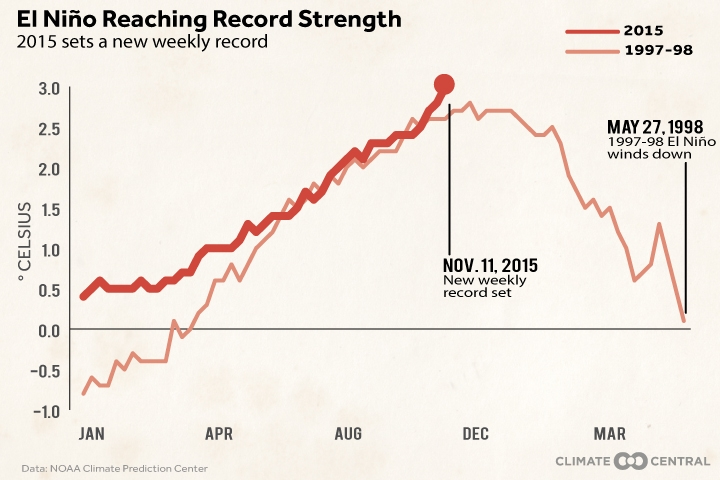
As I have mentioned in a previous post, 2015/16 El Niño period have shown signs of becoming stronger than the devastating 1997/98 El Niño. Now weekly measurements are showing that it indeed has passed the record high of 1997/98 with temperatures in the central Pacific of 3°C above normal. November is likely to be strongest month of the El Niño season that lasts until spring next year.

The ongoing El Niño has already caused a number of serious impacts globally. For example, warmer waters have lead to major coral bleaching events and according to the UN, 11 million children are at risk from hunger, disease and lack of water in eastern and southern Africa, while 2.3 million people in Central America will need food aid as El Niño exacerbates a prolonged drought.

Regional Impacts
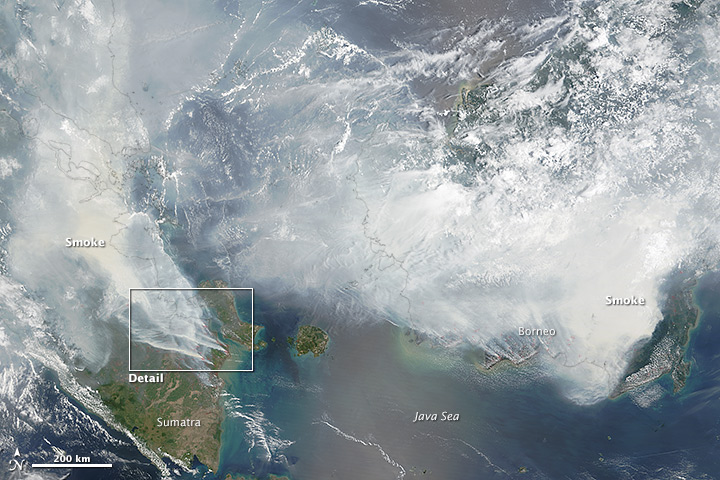

South East Asia: Dryer conditions in Southeast Asia has helped fuel massive peatland wildfires in Indonesia. This has caused dense haze to cover many parts of Indonesia and neighbouring countries with serious health impacts for local populations and has released a huge amount of greenhouse gasses to the atmosphere, making Indonesia a major contributor to climate change.
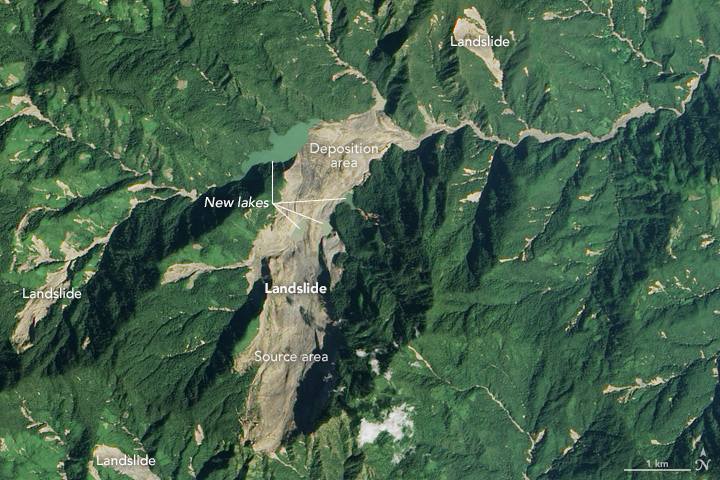

South Asia: Lack of precipitation in India due to changes in the southwest monsoon has also caused dryer conditions and risk of drought with potentially serious impacts on farmers and subsistence livelihoods. Especially since India suffered a deficient monsoon, lack of precipitation, last year as well. Meanwhile in Myanmar (Burma) a Tropical Storm drenched the western region and caused a massive landslide. More than 17,000 homes were destroyed, 46 people were killed, and hundreds of thousands of people were affected by the storm.
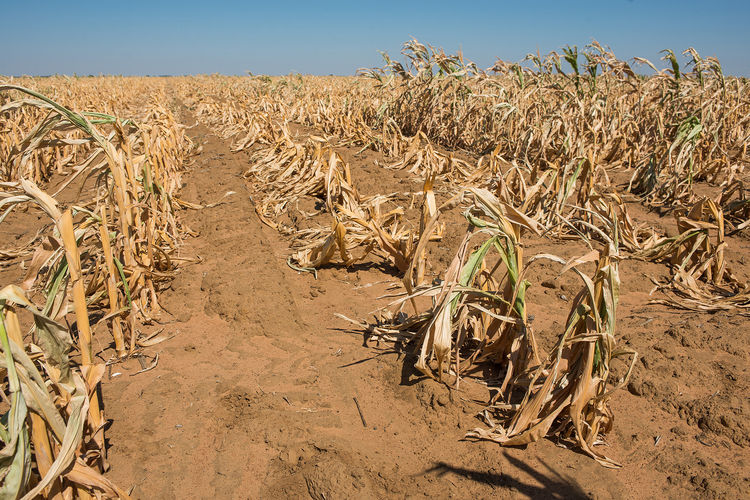


Southern Africa: A number of countries in southern Africa are reporting below average rainfall leading to drought conditions and fears of food insecurity. South Africa is in the midst of its worst drought since 1982, with 2.7 million households facing water shortages and farmers that cannot plant crops because of lack of precipitation. Some cities have implemented water restrictions, drastically reducing the amount of water residents can use. Regional prices for staple foods like maize meal, bread, eggs and chicken are up several percentage points. “When the maize crop goes down, the circumstances for social unrest go up … This is exactly how the Arab spring in the Middle East started, said Louis Meintjes, president of the Transvaal Agriculture Union.
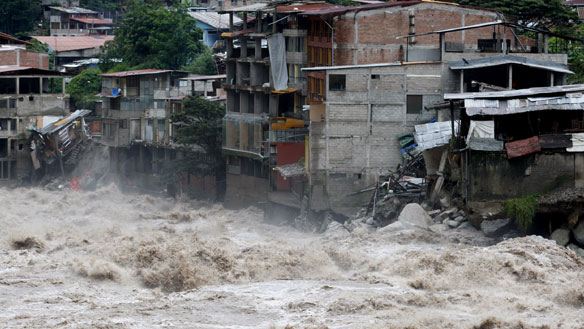


South America: Ecuador and Peru has suffered from flooding, extensive erosion, mudslides with loss of lives and infrastructure as well as damage to food supplies. Peru has declared a state of emergency as the country prepares itself for the worst weather system in over 60 years. Eastern Brazil is experiencing a major drought, driven by population pressure and deforestation, that could be worsened by dryer El Niño conditions. Satellite data shows the southeast of Brazil losing 56 trillion liters of water in each of the past three years - more than enough to fill Lake Tahoe. Water rationing, power blackouts and empty reservoirs in parts of the country have become a reality. More than 11,000 forest fires have been observed in the Amazonas province of Brazil this year, a 47% increase over the same period last year, according to the National Institute for Space Research. The storms that usually keep the jungles of southern Mexico and Central America wet shift northward to the southern US during strong El Niño winters. According to the World Food Program, 3.5 million people in Guatemala, Honduras and El Salvador need food aid due to drought and crop failures.
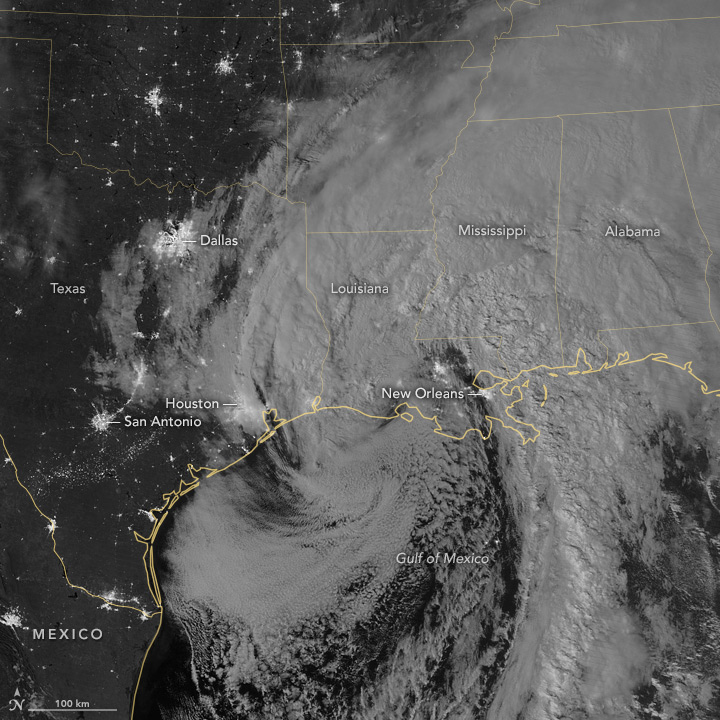


North America: According to NOAA, almost 95% of U.S. coral reefs will have been exposed to ocean conditions that can cause corals to bleach by the end of the year. El Niño has also contributed to a very active tropical cyclone season in the Western North Pacific and Eastern North Pacific. Hurricane Patricia, which made landfall in Mexico on 24 October, was reportedly the most intense tropical cyclone in the western hemisphere ever recorded. While category 5 Hurricane Patricia weakened rapidly after hitting the rugged terrain along Mexico’s Pacific coast, remnants of the storm combined with other weather systems over the Gulf of Mexico to produce heavy downpours and widespread flooding in Texas and Louisiana

El Niño conditions and disease risk

The development of these conditions also has important implications for global public health. Multiple epidemiological studies have linked El Niño events with increased incidence of disease outbreaks.
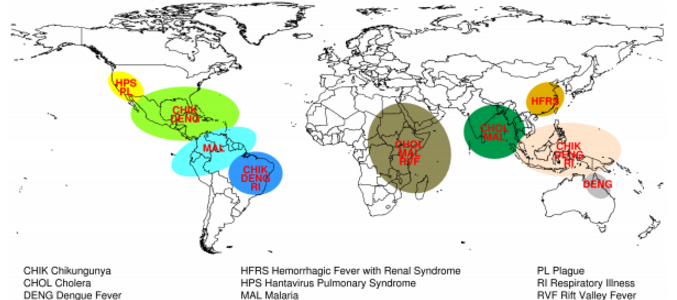


Disease
Region
Climatic influence
Cholera
Great Lakes region, Bangladesh, India (coastal), Sri Lanka, Peru
Warmer water temperatures promote bacteria proliferation; flooding causes contamination of water sources.
Dengue
Indonesia, Thailand, Pacific Islands, Australia (Queensland), Mexico, United States (southern), Colombia, Ecuador (coastal)
Water storage promotes mosquito vector breeding; elevated temperatures reduce the incubation period.Elevated rainfall promotes mosquito breeding.
Hantavirus
China (eastern), United States (southwest)
Elevated rainfall increases food availability for rodents which expands populations and may promote contact with humans.
Leishmaniasis
Brazil (eastern), Costa Rica, Colombia
Warmer temperatures or dry conditions may favor sand fly vectors or contribute to waning human immunity (e.g., via malnutrition or temporarily suppressing disease transmission).
Malaria
China (Anhui Province), India/Pakistan (Punjab), Sri Lanka, Colombia, Peru, Venezuela
Elevated rainfall promotes mosquito vector breeding and survival.
Plague
Madagascar, United States (western)
Heavy rains increase food availability for populations of susceptible rodents; cooler temperatures may increase infectious flea abundance.
Rift Valley Fever
East Africa
Flooding of dry mosquito vector habitats promotes hatching of infected eggs, vector breeding and survival.
Respiratory Illness
Southeast Asia/Indonesia
forest fires cause air pollution that may increase risk of respiratory infection

Monster El Niño 2015/2016

Warmer waters in eastern Pacific Ocean

Every 3-7 years variations in tropical winds and pressure shift warm ocean water east to the South American coast, causing an El Niño event. Last time we experienced a really strong El Niño was in 1997/1998 but this years event have the potential to top that record, according to many scientists. There is a 90% chance that El Niño will continue through the Northern Hemisphere winter 2015-16 (NOAA, 2015).

The map shows sea surface temperature anomalies in June 2015. We can see that there is a long patch of warmer waters off South Americas west coast stretching all the way to Indonesia. This is a typical characteristic of an El Niño event. We can also see the "blob", persistent warm patch, off North Americas west coast that has impacted California's drought condition.
This week average temperatures jumped to above 1.9C which is much sooner than most models predicted, that indicated it would occur by October/November. We could reach ocean warming of 2.2 or even 3C above average by the end of the year. Such temperature anomalies would exceed the maximum values seen during the record 1997/98 event.

Worse weather under current climate change?

Combining our current climate forcing with such a powerful El Niño could mean that global average atmospheric temperatures will continue to hit record highs. The heat coming from the Pacific Ocean is massive and will probably reinforce the the "hot blob" in the Northern Pacific as well as transport warmer waters into the Arctic, through the Bering Strait. This could increase the melting of Arctic sea ice with a reinforcing feedback of further warming in the region. A powerful El Niño could also increase storminess along the south and eastern US and across the North Atlantic where a cold pool south of Greenland (associated with a weakening North Atlantic current) is already intensifying storms.