.png)

Pestilence - Deadlier than war
"Everybody knows that pestilences have a way of recurring in the world; yet somehow we find it hard to believe in ones that crash down on our heads from a blue sky" ‒ Albert Camus, The Plague, 1948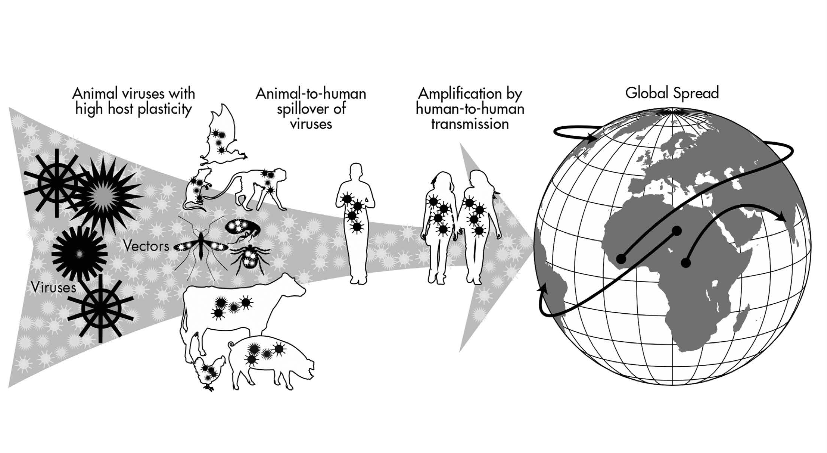
The only top predator left to infect
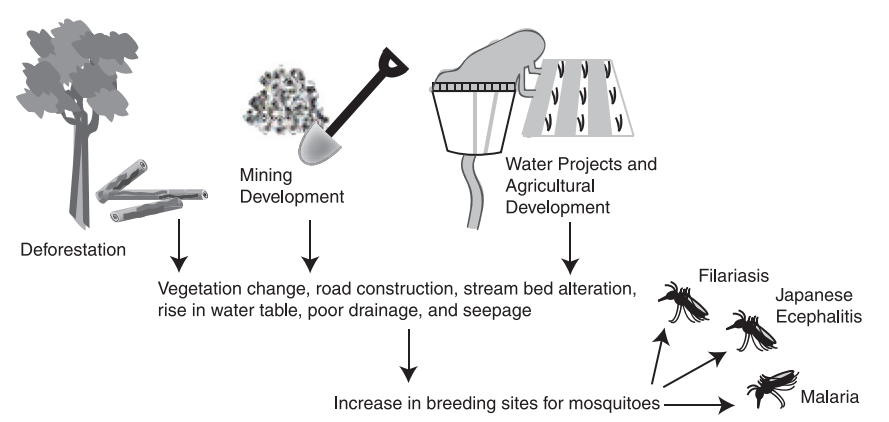
When humans start putting extreme pressure on local ecosystems, through for example overpopulation and deforestation, communities become more susceptible to emerging or novel zoonotic diseases as natural habitats disappear and exposure to pathogens increases. Several of today’s most pervasive diseases originally stemmed from domestication of livestock some 10,000 years ago. For example, tuberculosis, measles, and smallpox emerged following the domestication of wild cattle. Many pathogens that are currently passed from person to person, including influenza, Ebola and HIV, were formerly zoonotic but have mutated and adapted to human hosts. Today, wild animals are significantly more likely to be a source for animal-to-human spillover of viruses than domesticated species. According to one recent study, wild rodents are the most common source (58%) of spillover of zoonotic viruses, followed by primates and bats. Wildlife habitat destruction or encroachment, changes in surface waters, industrial monocultures, chemical pollution, uncontrolled urbanization, migration, international travel and trade have all increased the risk of disease spread in humans and the potential for a pandemic.
Toxic Cocktail
We know that our highly interconnected global society is very vulnerable to disruptions in food, water and energy supply. Another threat to the continuation of our civilization is global toxification. The 30 million tonnes a year global output in synthetic chemicals has left no living creature on Earth without these chemicals in its organs. The full impact of the chemical soup we are all living in whether we are a whale or a human are yet unknown. However, we know that the emergence of widespread antibiotic resistance is likely to cross paths with our exhausted immune systems compromised by chemical contamination, and the fact that with such high population density in many urban areas we are increasingly vulnerable to pandemics.
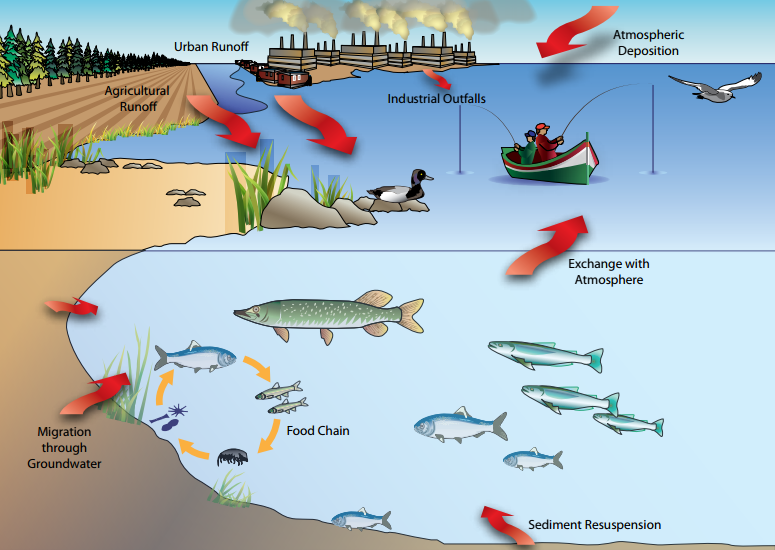 |
| Exposure of fish and wildlife in urban regions due to continuous release of Endocrine Disrupting Chemicals in oceans and to the atmosphere.Source: WHO, 2012 |
Antibiotic Resistance
The fact that some antibiotics no longer work in people who need them to treat infections is now a major threat to public health, according to WHO. Over the last 30 years, no major new types of antibiotics have been developed.

According to a recent study published in the journal Lancet Infectious Diseases, scientists in China have discovered significantly increased levels of bacteria resistant to the antibiotic colistin in pigs. The drug is a last line of defense against a host of bacterial infections, many of which are common in people. Researchers have linked the growing prevalence of “super-germs” to the overuse of antibiotics in food animals. The drugs, used predominantly in the Chinese livestock industry, can keep animals healthy in an industrialized food process, but their use over time can embolden the very bacteria they were designed to fight against. In 2005, the European Union banned the use of antibiotics in livestock for non-medicinal purposes, but the drugs are still widely used across the continent, and are rampant in the agricultural industry in the United States. As people in wealthier regions run out of effective antibiotics, they come to share the lot of people in poorer regions who can’t afford them to begin with. In April 2014, the WHO declared that the problem “threatens the achievements of modern medicine. A post-antibiotic era — in which common infections and minor injuries can kill — is a very real possibility for the 21st century.”
Historical Pandemics
The bacterium Yersinia pestis carried by fleas on rodents has caused at least three human plague pandemics, the Justinian Plague (6–8th centuries), the Black Death (14–17th centuries) and third Plague (19–20th centuries). In 541 A.D., the Justinian Plague caused 5,000 deaths per day in Constantinople, killing an estimated 25 million people globally. It spread from central Asia or Africa across the Mediterranean into Europe and may have contributed to the end of the Roman empire, marking the transition from the classical to the Medieval period. The Black Death arrived in the Eastern Mediterranean in 1347 and struck Italy, southern France with vehemence in 1348, came to England at the end of that year and spread northwards reaching Scandinavia in 1350.
Larger cities were the worst off, as population densities and close living quarters made disease transmission easier. Cities were filthy with poor sanitation, infested with lice, fleas, and rats, and subject to diseases related to malnutrition and poor hygiene. Where the plague raged, it raged for a couple of months and then spent itself. The Black Death killed an estimated 100 million people over 7 years. Religious fanaticism in the wake of the Black Death lead to the persecution of groups such as Jews, friars, foreigners, beggars, lepers and Romani, as Europeans thought that they were to blame for the crisis. Subsequent outbreaks of this disease occurred in 8–12 year cycles for two centuries after the initial epidemic, with estimated mortality of 15–40%. The emergence of these plague pandemics might be tightly linked to climatic instability as all were preceded by periods of exceptional rainfall and ended during periods of climatic stability.
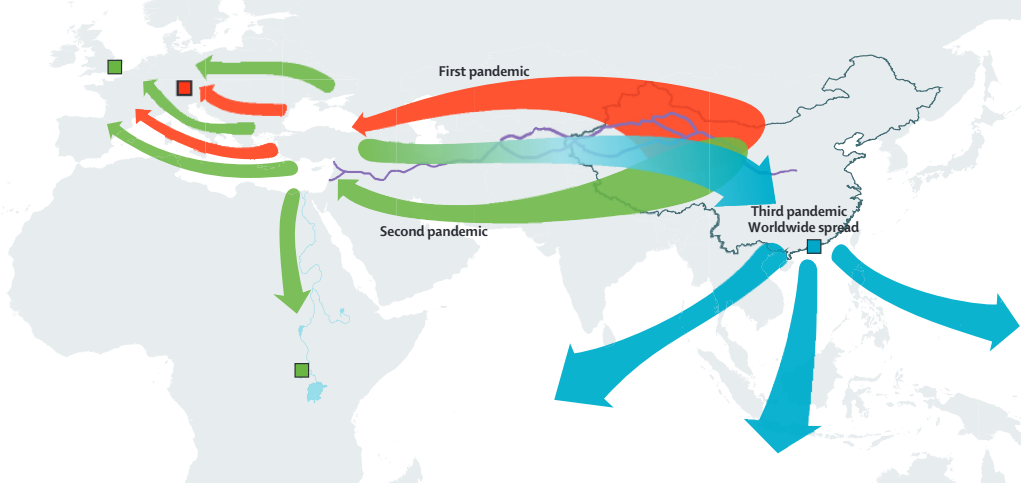 |
| Hypothetical scenario for the geographic spread of Yersinia pestis. Source: Wagner et al. (2014) |
The Spanish Flu
In 1918-19, the Spanish flu (H1N1) killed roughly 100 million people and infected 500 million people while affecting working age people (15–54 year olds) most severely. WWI was raging at the time and governments tried to control the public by limiting free speech. The pandemic was known as Spanish flu because Spain was not at war, had a more free press, and could report on the illness. Most of Europe had a censored press. In the U.S. the Sedition Act 1918 was passed, extending the Espionage Act of 1917 to cover a broader range of offenses, notably speech and the expression of opinion that cast the government or the war effort in a negative light. The 1918–1919 influenza pandemic swept across countries during a time when patriotism was more important than truth. Thus, intimidation and propaganda were part of the communication culture. People heard from authorities and newspapers that everything was going fine, but at the same time, bodies were piling up.
 |
| Emergency hospital during 1918 influenza pandemic, Camp Funston, Kansas. Source: Otis Historical Archives Nat'l Museum of Health & Medicine (CC-BY 2.0) |
War and disease
According to the WHO, previous to the conflict in Syria, more than 90% of Syrian children were vaccinated against disease like measles and polio. Since the fighting in Syria began almost 5 years ago, half of all health workers have left the country, medical supplies are scarce and most facilities are in decay. Some 20 million people have fled their homes in the MENA region. Countries like Jordan and Lebanon are under immense pressure as demand on services for health, water and sanitation have increased exponentially. The low immunization rates among those living in and fleeing from conflict zones, endangers the lives of people across the entire region. The recent outbreak of polio in Syria led to its resurgence in Iraq, which had been free of the disease for 14 years, and in 2013, Jordan experienced a new outbreak of measles. In Yemen there has been an upsurge in cases of measles and dengue fever due to lack of basic health care and collapsed water and sanitation facilities. WHO estimates show that 2.6 million children under 15 years of age in Yemen are at risk of measles; 2.5 million under 5 are at risk of diarrhoeal disease and another 1.3 at risk of acute respiratory infections.
Second order effects
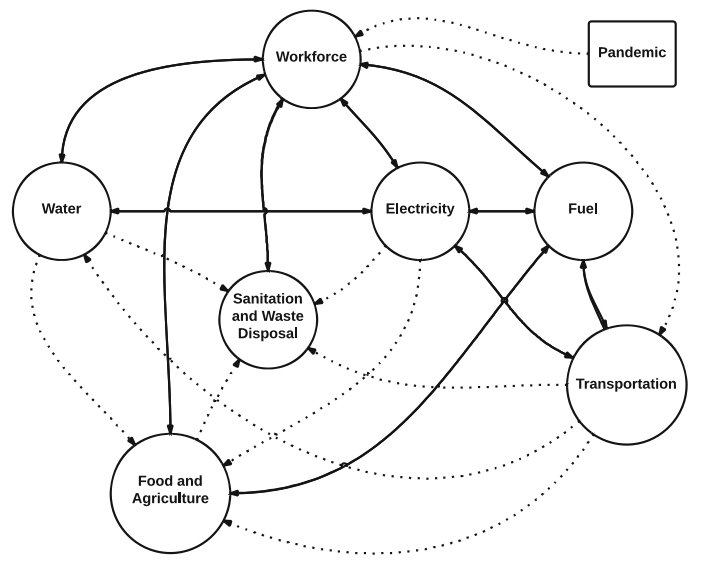 Limiting the disruption of critical infrastructures during a pandemic is important for the survival and health of society (i.e., electricity, water, and food) as most medical and public health responses to a pandemic depend on these infrastructures. The food system’s dependence on the transportation system creates a major vulnerability. On average, food travels 2092 km (1,300 miles) from farm to fork. The global food system functions in a just-in-time economy where food inventories are intentionally kept at such low levels that food arrives just in time for consumption. Since inventories are kept very low, there is vulnerability to unanticipated variations in flow. Increasing stocks of food costs money and decreases profits, therefore, agricultural businesses are reluctant to build food security resilience via stockpiling. The Ebola epidemic that began in 2014 has caused severe food shortages in West Africa. As of November 2014, the World Food Program estimated that 460,000 additional individuals became food insecure in Liberia, Sierra Leone, and Guinea as a result of production and trade reductions. According to a recent study, a severe pandemic with <25% reduction in labor availability could create widespread food shortages in the US. This likely applies to other countries as well, especially those with insufficient resources and food production at home.


 Posts
Posts

