.png)

Death of the American Empire: A dangerous time for peace
 |
| Two destroyed tanks in front of a mosque in Azaz, Syria. Credit: Christiaan Triebert (CC-BY-2.0) |
History is full of empires which in the process of their decline refused to go down peacefully. How will the American Empire end it’s days?
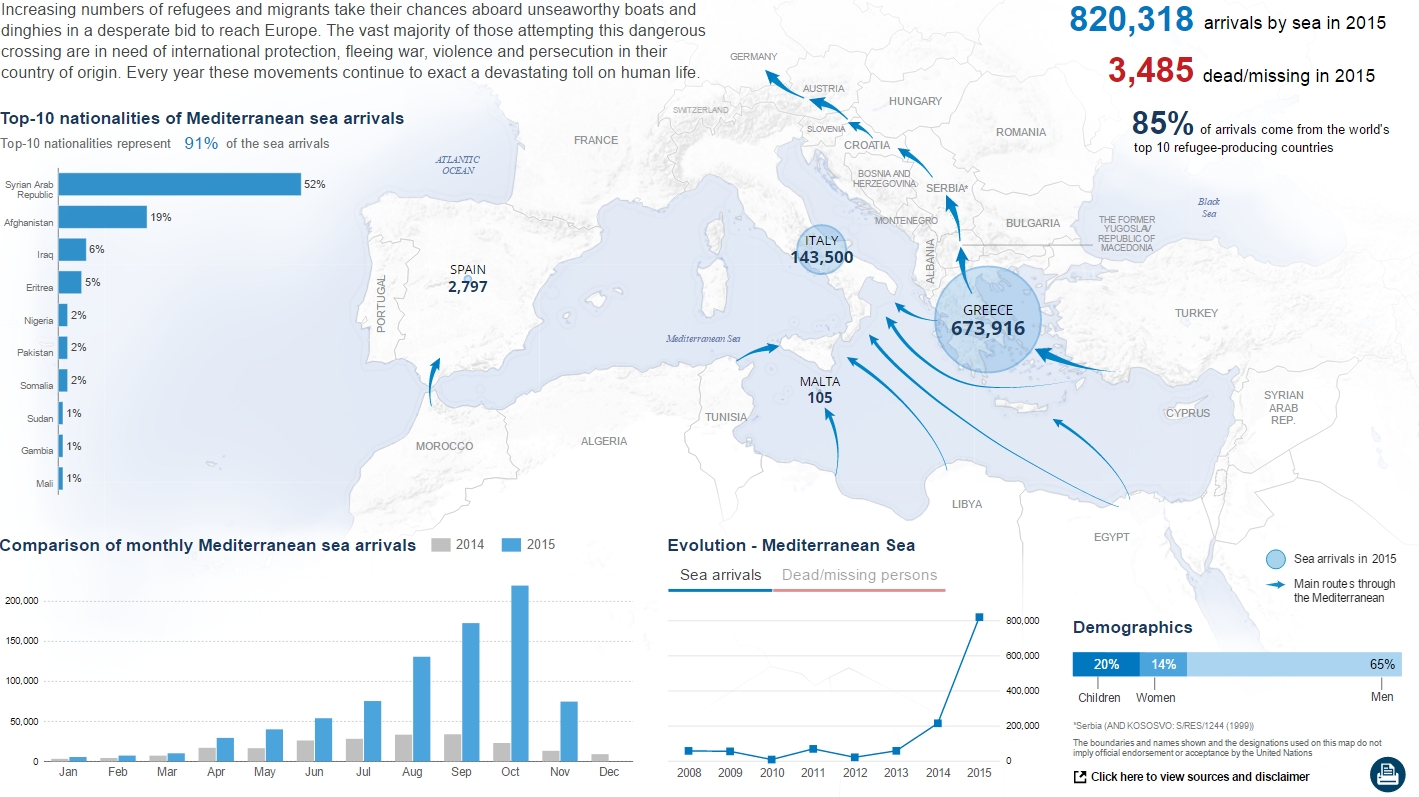
I hope no one is stupid enough to launch World War III. However, many states are fragile now (due to for example: overpopulation, environmental degradation, resource scarcity, bankruptcy, inequality and corruption) so very little is required in terms of external force to trigger conflict. This is clear in the context of the Middle East. Already fragile states, for example Yemen and Syria, turned into complete war zones after civil unrest and aggressive foreign military involvement. Now there are millions of refugees trying to escape the region and people wonder why.
There is a risk that hugely over-armed United States, constantly spreading war propaganda, turn a trivial incident into a major conflict or war. Especially if the domestic population really believe that “America is exceptional” as president Obama declared at the UN General Assembly in 2013, where he listed Russia, ISIS and Ebola as major threats to national security. In 2015, Obama also added Venezuela to that list of threats. Talk about crazy. Of course we all know there is oil in the Middle East, in Russia and Venezuela. Coincidence?
According to historian and author William Blum, since the end of World War II, the United States has:
- Attempted to overthrow more than 50 foreign governments
- Attempted to assassinate more than 50 foreign leaders
- Attempted to suppress populist or nationalist movements in 20 countries
- Dropped bombs on peoples of more than 30 countries
- Grossly interfered in democratic elections in at least 30 countries
- And have been more involved in the practice of torture than any other country in the world
“Interventions are not against dictators but against those who try to distribute: not against Jiménez in Venezuela but Chávez, not against Somoza in Nicaragua but the Sandinistas, not against Batista in Cuba but Castro, not against Pinochet in Chile but Allende, not against Guatemala dictators but Arbenz, not against the shah in Iran but Mossadegh, etc.” – Johan Galtung, founder of the discipline of peace and conflict studies
- Attempted to suppress populist or nationalist movements in 20 countries
- Dropped bombs on peoples of more than 30 countries
- Grossly interfered in democratic elections in at least 30 countries
- And have been more involved in the practice of torture than any other country in the world
Even if these numbers are incorrect its no secret that the rest of the world view the United States as the major threat to peace. While war mongering people in Washington utter crazy statements like “Assad must go even if Syria goes with him” - State Department spokesperson Mark Toner. Since the 80s, the US has intervened in the affairs of fourteen Muslim countries, including: Iran, Libya, Lebanon, Kuwait, Iraq, Somalia, Bosnia, Saudi Arabia, Afghanistan, Sudan, Kosovo, Yemen, Pakistan and now Syria. So, I can kind of understand if there are some pissed off muslims.
Not only has the US threatened Russia but also China by surrounding it with military forces. In a report on US-China relations published by the Council on Foreign Relations in 2015 it is stated that “there is no real prospect of building fundamental trust, ‘peaceful coexistence,’ ‘mutual understanding,’ a strategic partnership, or a ‘new type of major country relations’ between the United States and China.” And thus, the report declares that, the US must develop “the political will” and military capabilities “to deal with China to protect vital U.S. interests.” What interests? South China sea oil? Global dominance?
I hope the US runs smack into hard physical limits that cannot be solved by borrowing or printing money, finally forcing them to cut military spending or totally bankrupt the population to the point of domestic revolution. I'm sorry my american friends but your “leaders” are not just nuts they also have way too much destructive power at their disposal.
“Interventions are not against dictators but against those who try to distribute: not against Jiménez in Venezuela but Chávez, not against Somoza in Nicaragua but the Sandinistas, not against Batista in Cuba but Castro, not against Pinochet in Chile but Allende, not against Guatemala dictators but Arbenz, not against the shah in Iran but Mossadegh, etc.” – Johan Galtung, founder of the discipline of peace and conflict studies


 Posts
Posts

