.png)

Complacent adults and brave children
The Roman government kept the populace happy by distributing free food and staging huge spectacles to divert attention from a empire in decline, i.e. to prevent people from revolting. And that's basically the same short-term policies current governments employ to appease the public and distract them from collapse. The public may still voice their grievances but according to history they won't revolt until the bread and circuses stops. A surprisingly effective strategy it seems, even today.
Marx once said that "religion... is the opiate of the masses", meaning that it reduced people's immediate suffering and provided them with pleasant illusions which gave them the strength to carry on. Nowadays, such plesasant illusions are not only provided by religion but also by the entertainment industry, media and medical science in form of legal narcotics.
People were more worried about peak oil and accepted the science of climate change some years ago but then denial increased and they got meme fatigue, tired of reading about it. Looking at google trends on the search word peak oil we can see how interest was high from 2004-2009 but then dropped off significantly.
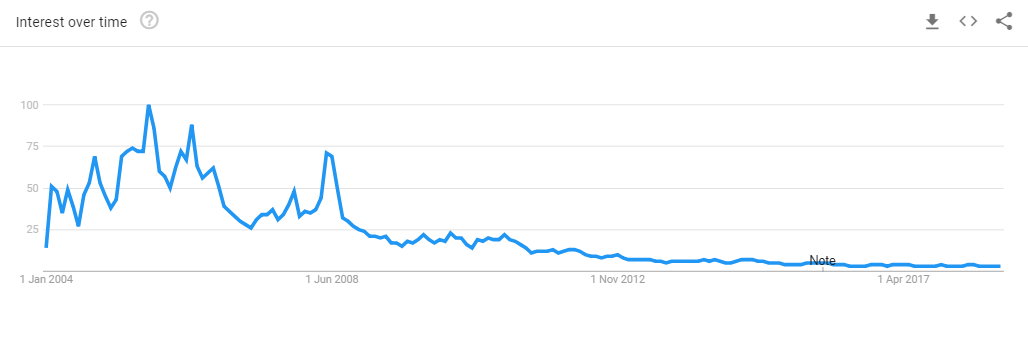


People were more worried about peak oil and accepted the science of climate change some years ago but then denial increased and they got meme fatigue, tired of reading about it. Looking at google trends on the search word peak oil we can see how interest was high from 2004-2009 but then dropped off significantly.
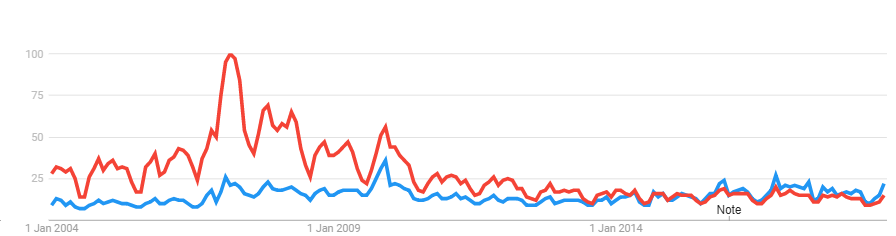
In the case of climate change the interest is more stable over time but when we look at related topics like global warming we see the same tendency of meme fatigue and denial increasing over time. And similar queries with the biggest increase in search frequency, not top search words, relate directly to climate denial and ignorance on the topic. Especially coming from North Americans, which is a reflection of how indoctrinated they are.
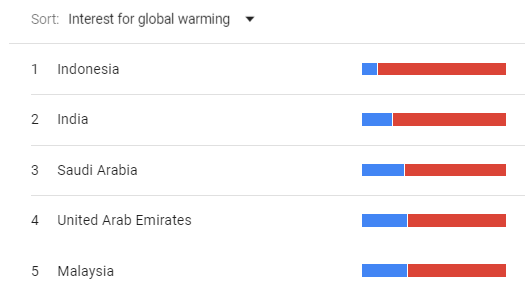
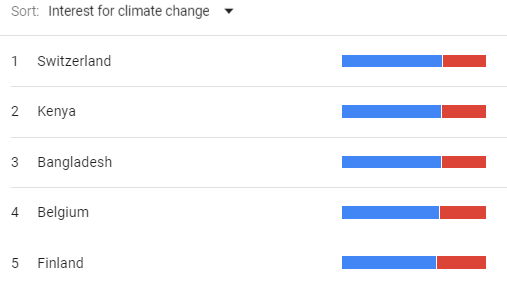
However, while many westerners seem in denial or complacent about climate change the topic seem to be of growing interest in nations like Kenya, Bangladesh, UAE, Saudi Arabia, Indonesia, India and Malaysia. Countries that are already hit hard by a changing climate, for example, 40% of Indias population suffer from acute water scarcity.
So, my theory is that the “comfy” delusional westerners won't revolt until the bread and circuses stop. Not until costs rise even further, in form of direct taxes or indirect by inflation/deflation, and food subsidies stop coming will people rise up and demand change. Despite the gross inequality in modern societies and falling living standards people stay passive like sacrificial lambs . They are simply too comfortable in the current system. But there is yet hope. The younger generation, that have nothing to lose, may yet drive some change. Lets end with "Gretas cry for help"



 Posts
Posts

